Sooner or later someone will ask for your ‘commercial gas safety certificate’: your insurer at renewal, your landlord, a buyer’s solicitor, environmental health or a client’s procurement team.
Most guides skip the nuance in the legal answer. No law creates a document called a commercial gas safety certificate. The law does require gas appliances, flues and pipework at work to be kept safe, and it requires a stricter annual check for any part of a building people live in. An annual inspection with a written record is how you show you have met both duties.
This guide is for facilities managers, property managers and business owners in Glasgow, Lanarkshire and the rest of Scotland. It covers mains gas, and the gas regulations are the same across Great Britain.
The short answer
- Workplaces: regulation 35 of the Gas Safety (Installation and Use) Regulations 1998 requires employers and the self-employed to keep gas appliances, flues and pipework in a safe condition. It sets no interval, but an annual inspection with a written record is the accepted evidence.
- Anywhere people live: regulation 36 requires an annual safety check and record for residential accommodation that is let. That includes flats above shops, hotel guest rooms and staff accommodation.
- Leased commercial units: who is responsible depends on the lease and on who controls each appliance.
- A proper inspection covers appliances, flues, ventilation, safety controls and combustion readings, plus a tightness test to IGEM/UP/1, UP/1A or UP/1B.
- Form names vary. CP17, CP42 and CP12 are the most common. What the record contains matters more than its name.
- The engineer must be Gas Safe registered, with the right non-domestic categories on their ID card.
Is a commercial gas safety certificate a legal requirement?
Not as a named document. What you need depends on how each part of the building is used, and many buildings have more than one use.
- Your own workplace: office, shop, school, warehouse, hotel public areas. Legal duty: Regulation 35: keep appliances, flues and pipework in a safe condition, plus the Health and Safety at Work etc. Act 1974. What you need in practice: An annual inspection with a written record for each appliance.
- Residential accommodation you let: flats, guest rooms, staff housing. Legal duty: Regulation 36: a safety check every 12 months, with a record kept and copies given to tenants. What you need in practice: An annual landlord gas safety record (often called a CP12).
- A commercial unit let to a business. Legal duty: Regulation 35 for the occupier, and section 4 of the 1974 Act for whoever controls the premises or plant. What you need in practice: A written split of responsibilities and copies of each other’s records.
- Premises classed as a factory. Legal duty: The 1974 Act (most of the 1998 Regulations do not apply). What you need in practice: In practice the same: annual inspection and records.
Workplaces: regulation 35
Regulation 35 says every employer and self-employed person must make sure any gas appliance, installation pipework or flue at a place of work under their control is kept in a safe condition, so nobody is put at risk of injury. That protects staff, customers, contractors and the public.
HSE’s Approved Code of Practice, L56, says effective maintenance usually means regular inspections plus remedial work. Unless the manufacturer says otherwise, the minimum is to examine the condition and safe operation of appliances, pipework, ventilation and flues, carry out performance tests and fix what is found. Regulation 34 adds that the occupier, owner or anyone with authority over the gas fittings must not use, or allow use of, an appliance they know or suspect is dangerous.
Why annual is the standard
The regulation gives no frequency. HSE’s catering and hospitality guidance treats annual inspection as a reasonable minimum unless the manufacturer asks for more, and annual is what insurers, landlords, lenders and auditors expect. Without a dated record, you have no easy way to prove you met the duty if something goes wrong.
Factories and some workshops
Regulation 2(4) excludes premises that count as a factory under the Factories Act 1961 (broadly, where people do manual work making, repairing or finishing articles) from most of the 1998 Regulations. The 1974 Act still applies, gas work must still be done by a competent person, and any flat or sleeping accommodation on site is fully covered.
Commercial landlords, tenants and mixed-use buildings
Commercial units let to a business
Regulation 36 does not apply to wholly non-residential buildings, so a shop or office unit has no statutory annual landlord check. Instead two duties meet. The tenant, as an employer, must keep safe the gas fittings at a workplace it controls. The landlord has a duty under section 4 of the 1974 Act for premises and plant it controls, and anyone obliged by the lease to maintain or repair something is treated as controlling it. L56 recommends setting the split out clearly in the lease.
- Full repairing and insuring lease of a whole unit: the tenant normally maintains and inspects everything.
- Multi-let building with central plant: the landlord or managing agent normally covers the boiler house and shared pipework, while each tenant covers appliances in its own unit.
- Either way: ask for a copy of the other party’s latest record.
Flats above shops
This is common on Glasgow’s tenement high streets. HSE’s guidance is clear: where a shop has a flat above, domestic gas duties apply to the flat and the landlord must arrange an annual check. Regulation 36 covers appliances and pipework in the flat and anything elsewhere that serves it, where the landlord owns or controls it or has an interest in that part of the building. A boiler in the back shop that heats the flat is in scope. Appliances used only by the shop are not, though regulation 35 still applies to them.
The flat must also meet Scotland’s Repairing Standard, including the carbon monoxide alarm rules. Our landlord gas safety guide covers those, and agents should see our letting agent compliance guide. If units are fed through secondary meters, regulation 17 requires a permanent line diagram at the primary meter and each emergency control.
Hotels and staff accommodation
HSE lists hotels, B&Bs, hostels and boarding schools among those needing annual checks. That covers any gas appliance serving guest accommodation, even one in a plant room. A manager’s flat that comes with the job counts as a tenancy too.
What a commercial gas safety inspection includes
There is no statutory checklist for a workplace. The baseline is the L56 maintenance minimum and the checks an engineer must make after working on any appliance (flue, combustion air, operating pressure or heat input, and safe operation). A thorough inspection covers:
- An asset list of every appliance, meter and isolation valve. First visits often find forgotten heaters or redundant pipework that should be capped off.
- Pipework: condition, supports, corrosion, sleeves and gas identification marking.
- A tightness test of the installation to the correct IGEM standard, plus let-by tests on the emergency control and any automatic isolation valves.
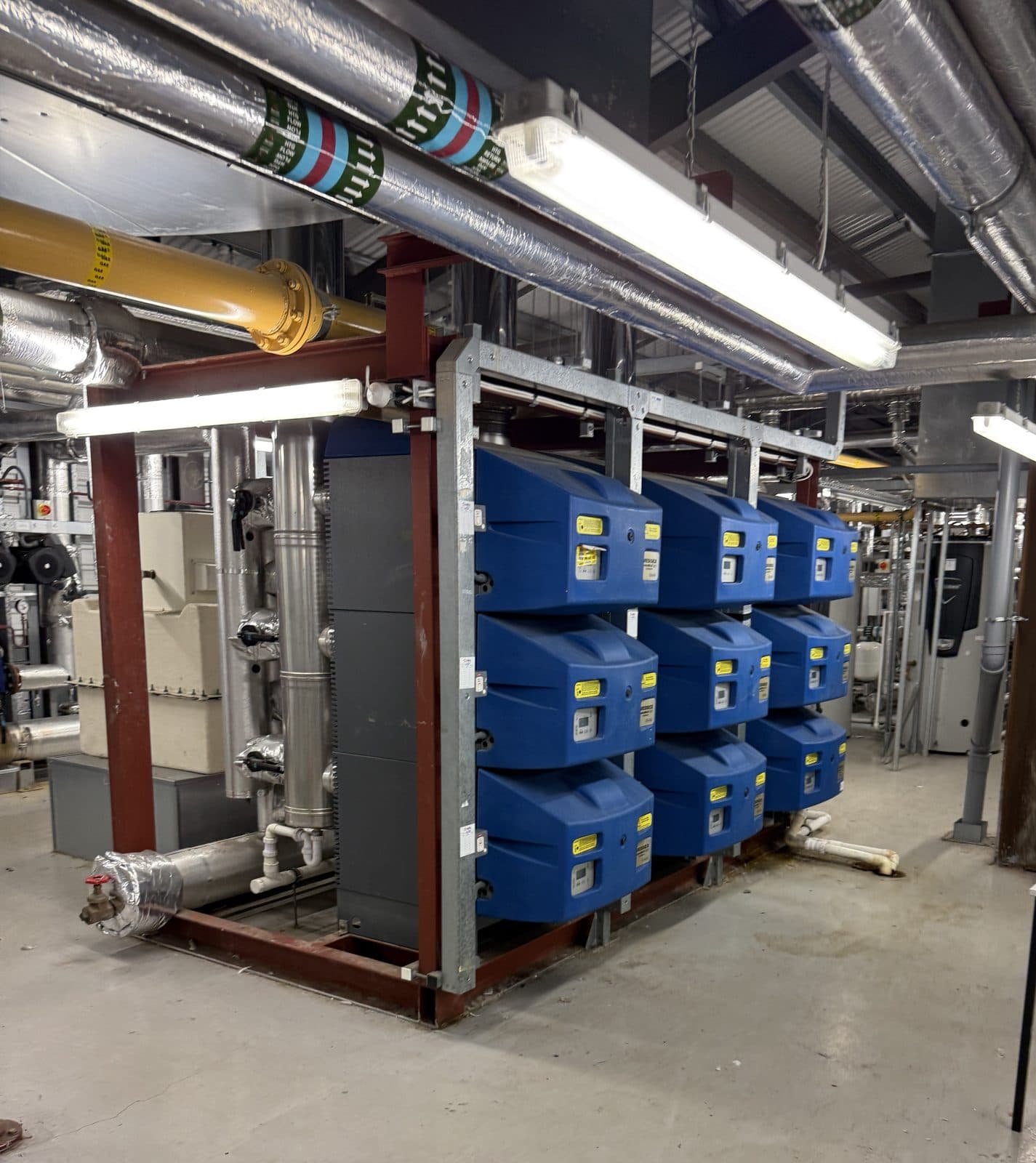
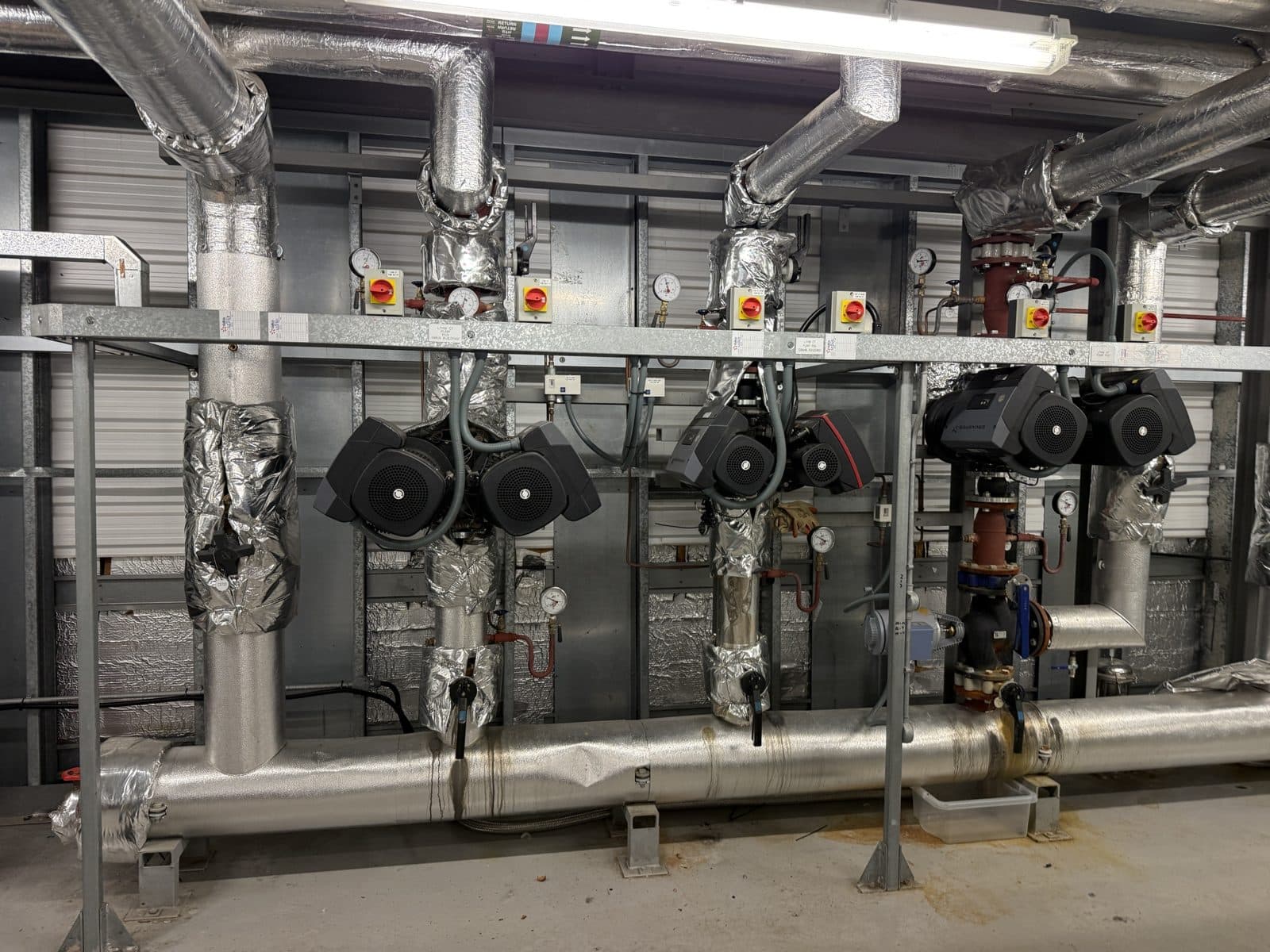
- Safety controls: emergency controls, plant room gas detection and automatic shut-off, flame supervision, and interlocks that stop appliances firing if ventilation or extraction fails.
- Ventilation: vents correctly sized and clear, and mechanical ventilation proven.
- Flues: inspected along their accessible length, with flow and spillage tests on open-flued appliances.
- Each appliance: operating pressure or heat input, burners, ignition and controls.
- Combustion analysis with a calibrated flue gas analyser, readings recorded. For flueless appliances such as direct-fired heaters, carbon dioxide in the space is checked instead.
- A written report of every result and defect.
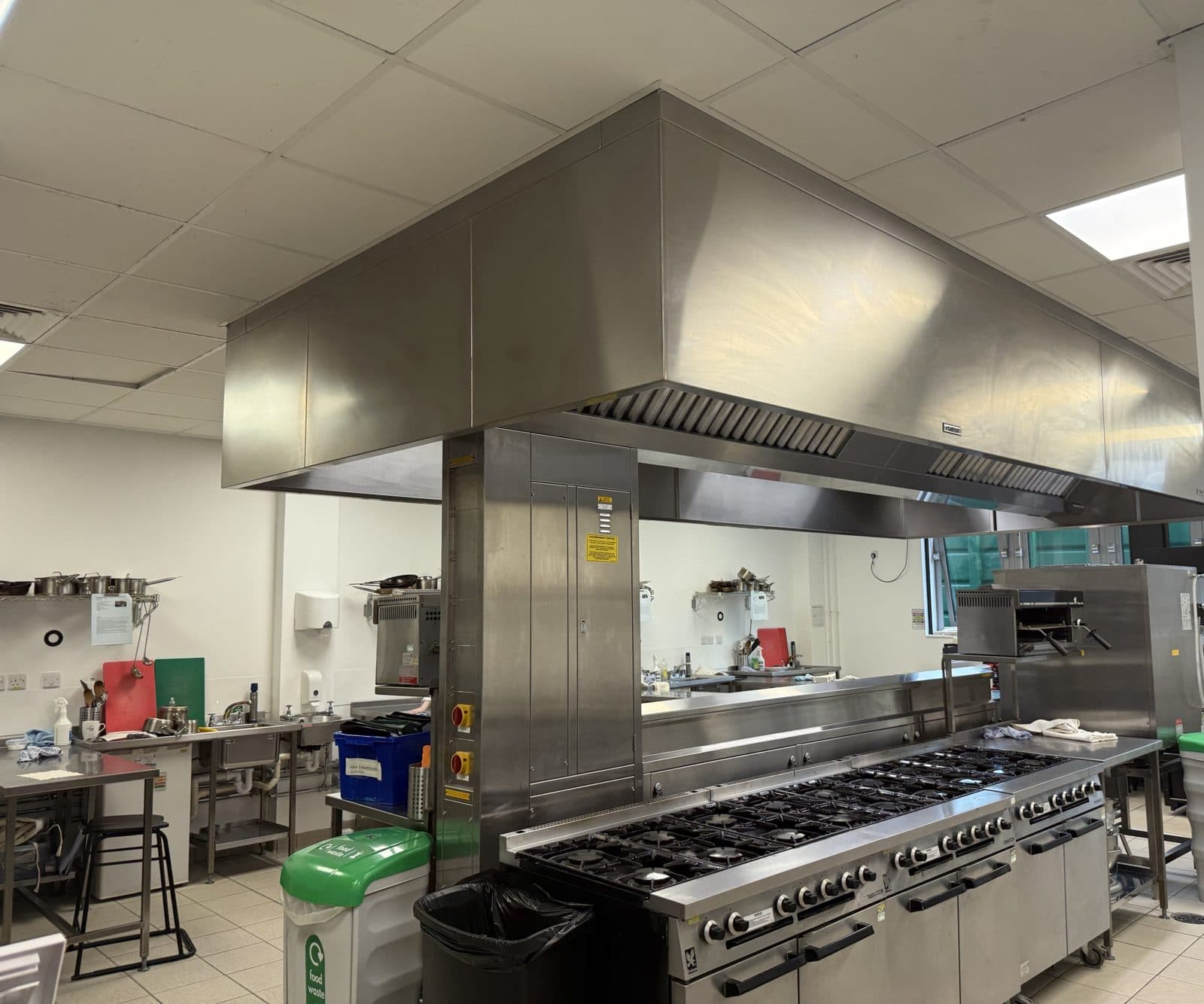
Commercial kitchens and warm air heaters have their own guides. We inspect commercial kitchens too. An inspection is not a service, so most sites combine the two or use a planned maintenance contract.
Which tightness testing standard applies?
The engineer chooses the standard by installation size and pressure, not by the size of the building.
- IGEM/UP/1B. Scope: Natural gas and LPG; pipework up to 35 mm; meter up to 16 m³/h; installation volume up to 0.035 m³. Edition 4 applies from 1 October 2026. Typical sites: Small shops, offices and church halls on a domestic-sized supply.
- IGEM/UP/1A. Scope: Natural gas only; up to 1 m³ including the meter; operating pressure up to 40 mbar; supply up to 75 mbar; pipework up to 150 mm. Typical sites: Most small and medium commercial installations.
- IGEM/UP/1. Scope: Anything larger, up to 16 bar maximum operating pressure. Typical sites: Large plant rooms, hospitals and industrial sites.
A record that only says ‘tightness test: pass’ tells you little. It should state the standard, test pressure, duration and result.
If something fails: unsafe situations and warning labels
Engineers classify faults using the Gas Industry Unsafe Situations Procedure (IGEM/G/11), which applies to domestic and non-domestic premises alike.
- Immediately Dangerous (ID): a danger now, such as a gas escape or fumes entering the room. With your permission the appliance is disconnected, labelled ‘Danger Do Not Use’ and a warning notice issued. If you refuse, the engineer calls the gas emergency service.
- At Risk (AR): a fault that could become dangerous. With your permission it is turned off, labelled and a warning notice issued.
An engineer cannot force you to switch off. But once you have been told an appliance is dangerous, using it breaches regulation 34. At critical sites, such as care homes, where a sudden shutdown would itself create risk, the responsible person can keep plant running under a documented risk assessment with extra safety measures. ‘Not to Current Standards’ is no longer a category, so minor shortfalls usually appear as recommendations.
If you smell gas, turn off the emergency control valve if it is safe to do so, open doors and windows, avoid electrical switches and call the National Gas Emergency Service on 0800 111 999. Headaches, dizziness, nausea or drowsiness that ease outside the building can mean carbon monoxide: get everyone into fresh air and seek medical advice.
The paperwork: CP17, CP42, CP12 and other names
There is no single legal form for a workplace. The ‘CP’ numbers come from CORGIdirect’s gas forms and are now industry shorthand. Other providers and software use their own titles.
- Commercial gas safety certificate. What it is: Informal name, usually meaning a non-domestic inspection record.
- CP17. What it is: Gas installation safety report (non-domestic).
- CP42. What it is: Gas safety inspection record for commercial catering.
- CP16. What it is: Gas testing and purging record.
- CP12 / landlord gas safety record. What it is: The regulation 36 record for residential lettings.
- Warning notice. What it is: Issued for any appliance classed ID or AR.
A good record shows the site, date and responsible person; the engineer’s name, signature and Gas Safe licence number; each appliance with its location, checks and readings; the tightness test details; any defects and action taken; and whether each appliance is safe to use. Regulation 36 records must be kept until two further checks are done. Keep workplace records at least as long, with invoices for any remedial work.
How often do you need an inspection?
- Every 12 months as a minimum, or more often if the manufacturer says so. For residential parts, a check in the two months before the due date keeps the original anniversary (regulation 36A).
- Before a new lease or tenancy starts.
- When you take over a building, rather than trusting inherited paperwork.
- After a gas escape, a carbon monoxide alarm, alterations or a change of use.
Book before plant works hard through a Scottish winter. Schools are best done during the summer holidays.
Who can carry out a commercial gas safety inspection?
HSE is clear that gas work in shops, restaurants, schools and similar workplaces must be done by a Gas Safe registered engineer qualified for that specific work. The categories on the back of the ID card must match your appliances.
Gas Safe Register splits categories into domestic and non-domestic, decided by pipework size, appliance type and gas consumption rather than the building alone. A domestic boiler in a church hall can be domestic work. Commercial boiler plant serving flats is commercial work. Look for categories covering commercial boilers (indirect-fired), warm air, direct-fired or radiant heaters, catering, laundry, and commercial pipework installation, testing and purging.
Check the photo, business, licence number and dates on the front, and the categories and expiry dates on the back. Confirm any engineer with the Check an engineer tool on the Gas Safe Register website or on 0800 408 5500. Oil-fired plant needs an OFTEC registered technician instead; see our commercial oil boiler guide.
What it means for your type of building
- Offices: usually central boiler plant. In multi-let buildings, find out whether the landlord’s plant record covers you. See office buildings.
- Shops: often a small boiler or heater on a domestic-sized supply. Check whether it also serves a flat. See retail premises.
- Hotels: plant rooms, kitchens and guest rooms under one roof, so you need both regulation 35 and regulation 36 records. See hotels.
- Care homes: heating and hot water that cannot simply be switched off. Keep a record for every appliance ready for the Care Inspectorate; see our care home guide.
- Schools: boiler houses, kitchens and science or technology rooms, which have extra gas isolation requirements. See schools and education.
- Churches and halls: older boilers or heaters used a few days a week, so faults can go unnoticed between visits.
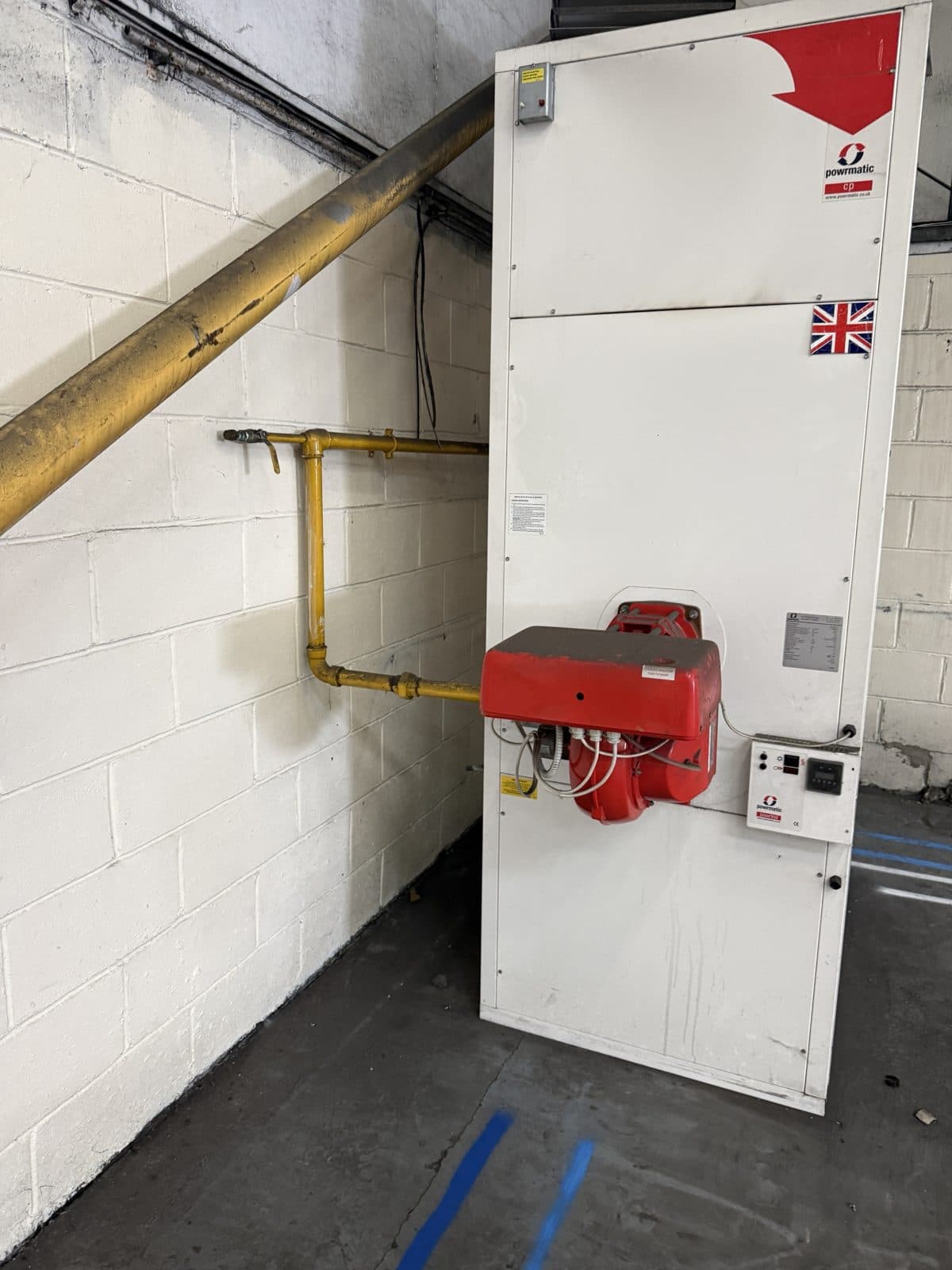
- Warehouses and workshops: high-level warm air and radiant heaters in dusty conditions. See warehouses and distribution centres.
- Mixed-use buildings: one visit can cover both parts, with a separate record for each. See property management.
How Titan Heat can help
Titan Heat carries out commercial gas safety inspections across Glasgow, Lanarkshire and Central Scotland, as a Gas Safe registered business (registration 982732). Stephen, our lead engineer, holds ACS commercial qualifications in commercial pipework installation, testing and direct purging (TPCP1 and TPCP1A), commercial boilers and indirect-fired warm air heaters (CIGA1), direct-fired heaters (CDGA1) and overhead radiant heaters (CORT1), plus domestic qualifications for flats.
One visit can cover boiler plant, heaters, the pipework tightness test and landlord records for any flats in the same building, with a record for every appliance. If remedial work is needed, we price it before any work starts. Pair the inspection with commercial boiler servicing to keep everything on one annual date.
Send us your building details through our commercial enquiry form, or read more about our commercial heating services.
Frequently asked questions
Is a commercial gas safety certificate a legal requirement in Scotland?
Not as a named certificate. Regulation 35 of the Gas Safety (Installation and Use) Regulations 1998 requires gas appliances, flues and pipework at work to be kept safe, and an annual inspection record is the accepted evidence. Any part of the building let as living accommodation needs an annual landlord gas safety check under regulation 36.
How often does a business need a gas safety inspection?
At least once every 12 months, or more often if the manufacturer requires it. Residential parts must be checked within 12 months of the last check.
What is the difference between a CP17 and a CP12?
A CP17 is a non-domestic gas installation safety report for commercial appliances. A CP12 is the landlord gas safety record for residential lettings. A mixed-use building may need both.
Who is responsible for gas safety in a leased commercial unit?
Whoever controls the gas appliances and pipework, which the lease usually decides. Under a full repairing and insuring lease of a whole unit that is normally the tenant. In multi-let buildings the landlord often covers central plant.
Do I need a gas safety certificate for the flat above my shop?
Yes, if the flat is let. It needs an annual check under regulation 36, including any boiler in the shop that heats the flat.
Can any Gas Safe engineer do a commercial gas safety inspection?
No. They need the non-domestic categories for your appliances, shown on the back of their Gas Safe ID card. Domestic-only engineers should not inspect commercial boilers, catering equipment or commercial pipework.
Do you cover my area?
Titan Heat’s commercial work covers Glasgow, Lanarkshire and Central Scotland. Send us the details through the commercial enquiry form.