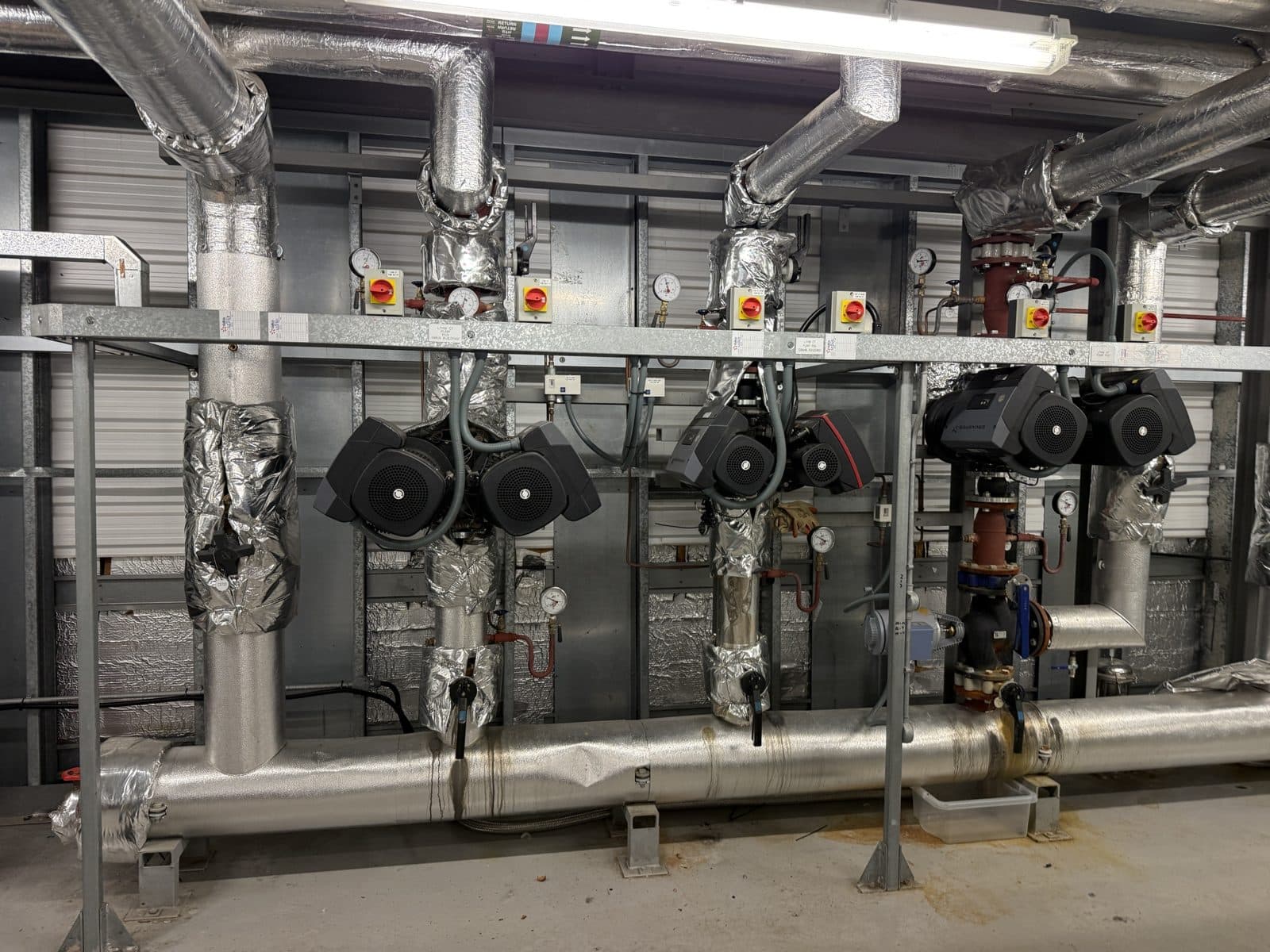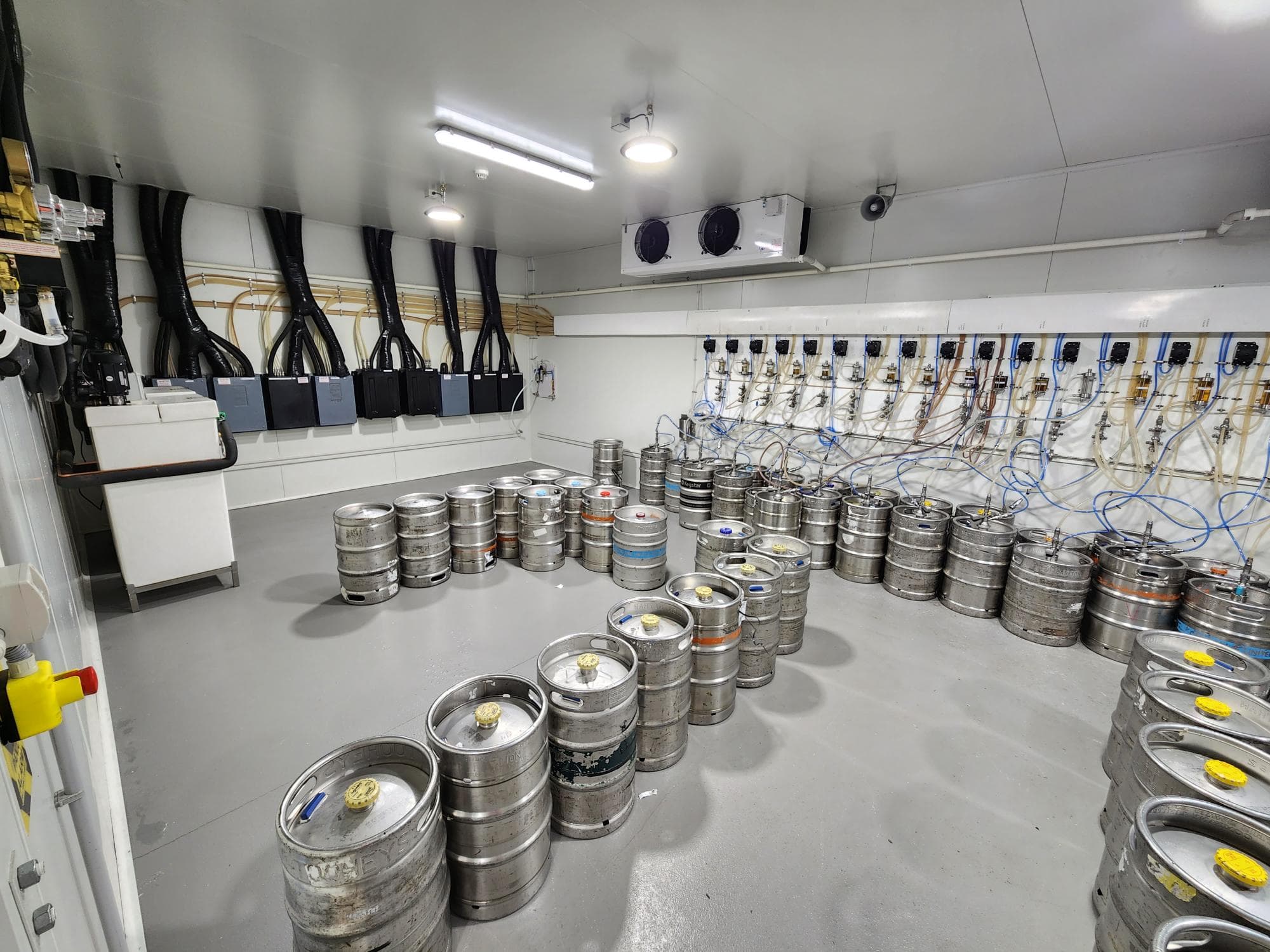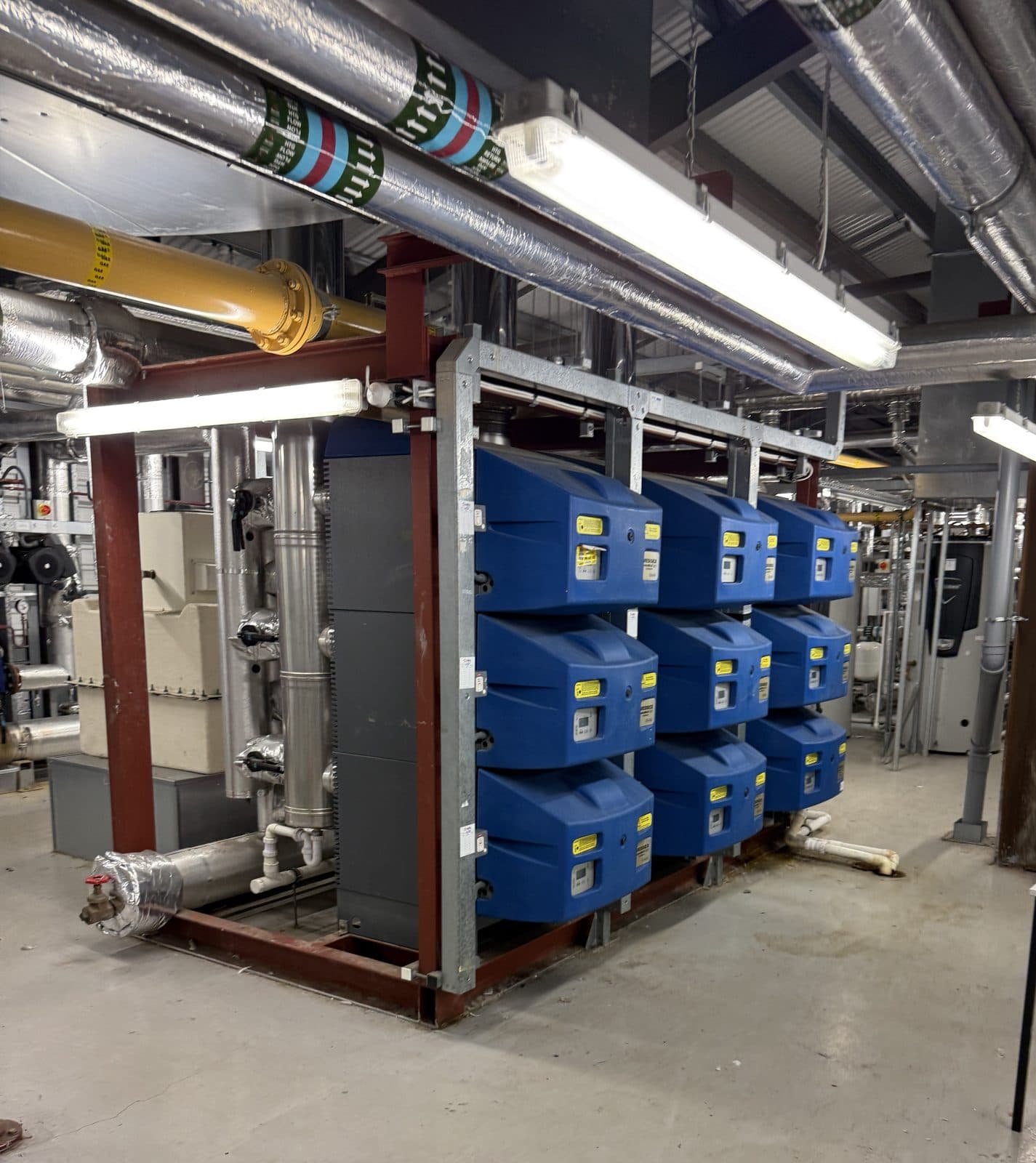
If you look after a school, care home, office, church, club or industrial unit, the heating plant is easy to forget about. It sits in a plant room or a roof void, and nobody thinks about it until it stops working, which is usually on the coldest morning of the year.
A planned preventive maintenance (PPM) contract is how you avoid that. This guide explains what a good maintenance plan should include, the legal duties it helps you meet, the different types of contract, and the questions to ask before you sign one.
The short answer
- A PPM contract means your heating plant is serviced and inspected on a fixed schedule, so faults are found before they turn into breakdowns, and you have the records to prove the plant is maintained.
- As a minimum, every gas or oil appliance should be serviced and safety checked at least once a year. Busy or critical plant often benefits from two visits a year.
- A good plan covers the whole system, not just the boiler: burners, flues, gas pipework, pumps, pressurisation units, controls, water treatment and hot water.
- Agree how breakdowns will be handled, and how quickly, before you sign.
Why planned maintenance matters
- Breakdowns cost more than maintenance. An emergency call-out, a rushed part and a building without heat all cost more than a planned visit.
- Some buildings can't be without heat. A school may have to close. A care home has vulnerable residents who need heating and hot water all day, every day.
- Efficiency. Dirty burners, fouled heat exchangers and poorly set combustion waste fuel every hour the plant runs.
- Safety. Regular checks pick up gas escapes, flue problems and poor combustion before they become dangerous.
- Plant life. Boilers and pumps that are looked after last longer, and replacement can be planned rather than forced on you mid-winter.
- Records. Insurers, landlords, inspectors and auditors all want evidence that your plant is maintained.
The legal duties a maintenance plan helps you meet
Gas safety
Under regulation 35 of the Gas Safety (Installation and Use) Regulations 1998, employers and the self-employed must make sure gas appliances, flues, pipework and safety devices at the workplace are maintained in a safe condition. A regular service and safety inspection by a Gas Safe registered engineer, with written records, is how you show you're doing that. If you let any residential accommodation, the annual landlord gas safety check also applies to those areas.
Hot water and legionella
If your site stores hot water in calorifiers or water heaters, it needs to be managed as part of your legionella risk assessment. HSE guidance is that hot water should be stored at 60°C or above and reach at least 50°C at outlets within one minute, or 55°C in healthcare premises. A good maintenance plan includes temperature checks on the plant it looks after, or ties in with whoever manages your water safety.
Scalding risk in care settings
Where vulnerable people use baths or showers, HSE says a Type 3 thermostatic mixing valve (TMV) must be fitted to stop water being delivered above 44°C. TMVs need regular checking and servicing to keep working, so they belong in the maintenance plan for care homes and similar buildings.
Pressure systems
Steam plant, and some larger pressurised systems, fall under the Pressure Systems Safety Regulations 2000. These need a written scheme of examination and periodic examinations by a competent person. If you're not sure whether your plant is covered, ask your insurer's engineering inspector.
What a good maintenance plan should include
A clear visit schedule
At least one full service and gas safety inspection a year for every appliance. For larger or critical plant, a second visit is worthwhile, typically a full service before the heating season and an inspection mid-winter. The industry standard specification for building maintenance tasks, SFG20, is a useful benchmark. Ask whether the contractor's task lists are based on it.
Boilers and burners
- Strip and clean the burner and heat exchanger where the manufacturer requires it.
- Check ignition, flame detection and all safety controls.
- Check gas pressure and gas rate.
- Combustion analysis, with the readings recorded, so you can see whether the plant is running efficiently.
- Check condensate drains and traps on condensing boilers.
Gas safety
- Tightness test the gas installation to the right IGEM standard for its size.
- Check plant room ventilation is adequate and unobstructed.
- Inspect flues and chimneys along their full accessible length.
- Check emergency isolation valves, and any gas detection or automatic shut-off systems.
- Provide a written record for every appliance.
The rest of the heating system
- Circulating pumps.
- Pressurisation units and expansion vessels.
- Safety and pressure relief valves.
- Controls, time clocks, frost protection and any building management system.
- Valves, pipework and insulation in the plant room.
- Water treatment: inhibitor levels, dirt separators and filters. Poor water quality is one of the biggest causes of premature boiler failure.
Hot water
- Calorifiers, water heaters and their controls.
- Temperature checks.
- TMVs, where fitted.
Oil-fired plant
Oil boilers and burners need an engineer who is OFTEC registered for the work. Their service includes the burner nozzle, filters, oil supply line, fire valve and a check of the tank and its surroundings.
Proper records
You should get:
- an asset register listing every appliance and its location
- a service report for every visit, with readings, not just "serviced, OK"
- gas safety records for each appliance
- a list of defects, each with a priority and a recommended fix
- easy access to all of it when your insurer, auditor or inspector asks
Types of maintenance contract
PPM only. Scheduled servicing and inspections at a fixed price. Breakdowns are charged separately when they happen. Suits newer plant and buildings that can cope with a short outage.
PPM plus reactive cover. Scheduled visits, plus agreed response times and terms for breakdowns. Suits most commercial sites.
Comprehensive. Servicing, breakdowns and most parts included. It gives you the most budget certainty, but check the exclusions carefully, especially for older plant.
The right choice depends on the age and condition of your plant, how critical heating is to your building, and how much budget certainty you need.
Questions to ask before you sign
- Are your engineers Gas Safe registered for the right non-domestic categories for our plant, and OFTEC registered if we have oil? Can we see their ID cards?
- Exactly what is done on each visit, and how often?
- What are your response times for breakdowns, and what counts as an emergency?
- Do you provide cover out of hours and at weekends?
- How are defects reported and priced? Do we approve the work before it starts?
- What records do we get, in what format, and how quickly?
- Does the contract cover all the plant on site, or only listed assets?
- What are the notice period and renewal terms?
Signs your current contract isn't working
- The same plant keeps breaking down.
- Service sheets just say "serviced, OK", with no readings.
- The same defects appear on every report and nothing gets fixed.
- You've never seen a gas safety record or combustion readings.
- You've been told plant is beyond repair without a clear diagnosis.
That last one is worth a second opinion. Fixing plant that other contractors have struggled with or written off is a big part of what we do, and a proper diagnosis often finds a repairable fault.
What different buildings need
Schools. Major work planned for the holidays, with heating checked and running before the new term starts in August.
Care homes. Heating and hot water are critical around the clock. Priority breakdown cover, standby plant where possible, and TMV maintenance all matter.
Churches and community halls. Heating that sits idle for days at a time, frost protection, and often older boilers or warm air heaters.
Offices and retail. Comfort for staff and customers, and clear records for landlords and service charge audits.
Warehouses and industrial units. Warm air heaters and radiant heaters as well as boilers, often mounted high up and exposed to dust.
Golf, sports and social clubs. High hot water demand for showers, and often oil-fired plant in rural locations.
How Titan Heat can help
We provide planned maintenance contracts for gas and oil heating across Glasgow, Lanarkshire and Central Scotland. One plan can cover everything on your site: boilers, warm air heaters, catering equipment and hot water, with one set of records and one renewal date.
We start with a site survey and an asset register, then agree a schedule and level of cover that suits your building. Use our commercial enquiry form to tell us about your site and we'll arrange a visit and give you a clear quote.
Frequently asked questions
How often should a commercial boiler be serviced?
At least once a year, or as often as the manufacturer recommends. Heavily used or critical plant often benefits from a second visit each year.
What's the difference between planned and reactive maintenance?
Planned maintenance happens on a schedule to prevent faults. Reactive maintenance is fixing things after they break. A good contract does both, but the aim is to need as little reactive work as possible.
Can you take over from our existing contractor?
Yes. We'll survey the site, build an asset register, review your previous records and agree a schedule that picks up where the last contractor left off.
Do you work on oil-fired boilers?
Yes. We're OFTEC registered for oil-fired work as well as Gas Safe registered for gas.
Do you cover my area?
We provide commercial maintenance across Glasgow, Lanarkshire and Central Scotland.