More homes and businesses across Glasgow, Lanarkshire and Central Scotland are having smart gas meters fitted. For most people it's a quick swap. But a lot of people are being told the installer can't finish the job, and sometimes the gas is left switched off, because the installation failed a tightness test.
If that's happened to you, this guide explains what a tightness test is, why installations fail, what the meter installer can and can't do, and exactly what has to happen to get your gas back on and your new meter fitted. We cover homes first, then commercial premises, which are tested to different standards.
The short answer
- A tightness test checks that the gas pipework in your property is sound, meaning gas isn't escaping anywhere between the meter and your appliances.
- Meter installers tightness test the installation as part of a meter exchange. If the pressure drops by more than is allowed, or there's a smell of gas, the installation can't be left in service.
- The pipework after your meter belongs to the property, not your gas supplier. Finding and fixing the leak is a job for a Gas Safe registered engineer.
- Once the leak is repaired and the system passes a retest, you can rebook your meter installation.
If you can smell gas right now, stop reading, open windows, don't operate electrical switches and call the National Gas Emergency Service on 0800 111 999.
What is a gas tightness test?
A tightness test proves whether a gas installation is holding pressure. On a typical home it goes like this:
- All appliances are turned off and the emergency control valve (ECV) next to the meter is closed.
- The engineer checks that the ECV itself is sealing properly and not letting gas through. This is called a let-by test, and it's done at a low pressure for one minute. If the valve lets by, the rest of the test can't be trusted.
- The pipework is brought up to the test pressure, 20 mbar for natural gas, using a pressure gauge connected at the meter test point.
- The pressure is left to settle for one minute, then watched for a further two minutes.
- If the gauge doesn't move, the installation is sound. If it falls, the engineer has to work out whether the drop is within the permitted limit or whether gas is escaping.
How much pressure drop is allowed?
Homes and smaller installations are tested to IGEM/UP/1B. Edition 4 of the standard applies to every tightness test from 1 October 2026. It sets the permissible drop by installation volume, meaning the meter plus all the pipework it feeds. The bigger the volume, the smaller the drop that's allowed, so the engineer has to work out the volume before they can judge the result.
Three rules matter more than the numbers:
- New pipework, or pipework with only new appliances connected: there must be no perceptible movement on the gauge.
- An existing installation with existing appliances connected: a small drop within the permitted limit isn't automatically a fail. The appliances are then isolated and the pipework is retested on its own, and that retest must show no perceptible movement. If an appliance can't be isolated, the stricter no-movement rule applies.
- A smell of gas is a fail, whatever the gauge says. The permitted limits only apply when there's no smell of gas.
LPG installations are tested in the same way at a higher pressure, around 37 mbar for propane, with tighter limits.
Why smart meter installations are uncovering leaks
Many of the meters being swapped have been in place for decades. In plenty of properties, nobody has tested the pipework since the day it was installed. A meter exchange includes a tightness test, so it's often the first time in years anyone has checked whether the system is actually sound.
The installer also has to leave the installation safe when they go. If they connect a new meter to pipework that's leaking, they're responsible for what they've left behind. So when the test fails, the job stops.
The most common causes of a failed test
These are the faults we find most often when we're called out after a failed meter installation:
- Cooker hoses and bayonet connections. Old or perished hoses, or a bayonet that isn't fully seated, are among the most common leaks we trace.
- Redundant pipework that was never properly capped. A gas fire removed years ago with the pipe left open behind the hearth, or sealed with tape, a crimp, or a cap that isn't rated for gas.
- Old joints in hidden places. Compression or threaded joints under floorboards, behind kitchen units or inside boxing.
- Corroded pipework. Steel and copper pipe where it passes through walls and floors, especially in older tenements and ex-council houses.
- Appliance isolation valves and control taps that have started to pass gas.
- Meter connections, such as perished washers on the meter unions.
- A faulty ECV. If the emergency control valve itself is letting gas through, that's the gas network's responsibility, not yours. Report it on 0800 111 999.
What happens on the day of a failed installation
If the installer finds a drop outside the limit, they shouldn't leave the gas supply on. In practice you can expect one of these outcomes:
- The gas is left off, and you're given paperwork explaining why.
- An appliance or the installation is labelled as unsafe under the Gas Industry Unsafe Situations Procedure, which every gas engineer works to. Where there is a present danger, such as a smell of gas or a significant leak, it's classed as Immediately Dangerous and the supply is isolated or disconnected.
- You're told to get a Gas Safe registered engineer to find and repair the leak before the meter installation is rebooked.
Meter installers fit and exchange meters. Repairing the pipework in your property isn't part of that job, which is why you'll be pointed towards a Gas Safe registered engineer.
How to get your gas back on: step by step
- Don't turn the gas back on yourself, and don't use any appliance that's been labelled. If you smell gas, call 0800 111 999.
- Book a Gas Safe registered engineer to trace and repair the leak.
- The engineer finds the leak. We repeat the tightness test, isolate the appliances, then split the pipework into sections to narrow down where the gas is going.
- The fault is repaired. That might be a new cooker hose, a remade joint, a properly capped redundant pipe, or replacing a corroded section.
- The installation is retested and has to pass. We record the result and give it to you.
- Your appliances are relit and checked.
- You rebook your smart meter installation with your energy supplier. Keep the test record in case the installer asks for it.
How we trace a gas leak
Finding a leak is a process of elimination:
- Appliances first. We isolate each appliance and retest. If the drop disappears, the leak is in an appliance or its connection.
- Then the pipework. If the pipework alone still drops, we divide it into sections and test each one.
- Then the exact joint. Once we know the section, we use leak detection fluid and an electronic gas detector to pinpoint the joint or length of pipe.
Concealed pipework under floors or behind finished walls takes longer to reach. Sometimes it's quicker, cheaper and safer in the long run to run a new section of pipe than to chase an old one through a building.
Commercial premises: different rules, bigger systems
Shops, offices, schools, care homes, restaurants, churches and industrial units are tested to different standards from homes, and the work takes more planning.
- Small commercial installations. IGEM/UP/1A covers low-pressure natural gas installations with a volume of up to 1 m³ and pipework up to 150 mm nominal bore.
- Larger or higher-pressure installations fall under IGEM/UP/1, which covers systems operating at up to 16 bar.
- Longer and more involved testing. Commercial test durations are longer than in a home. New or altered pipework may need a strength test before the tightness test, and purging before it's put back into service.
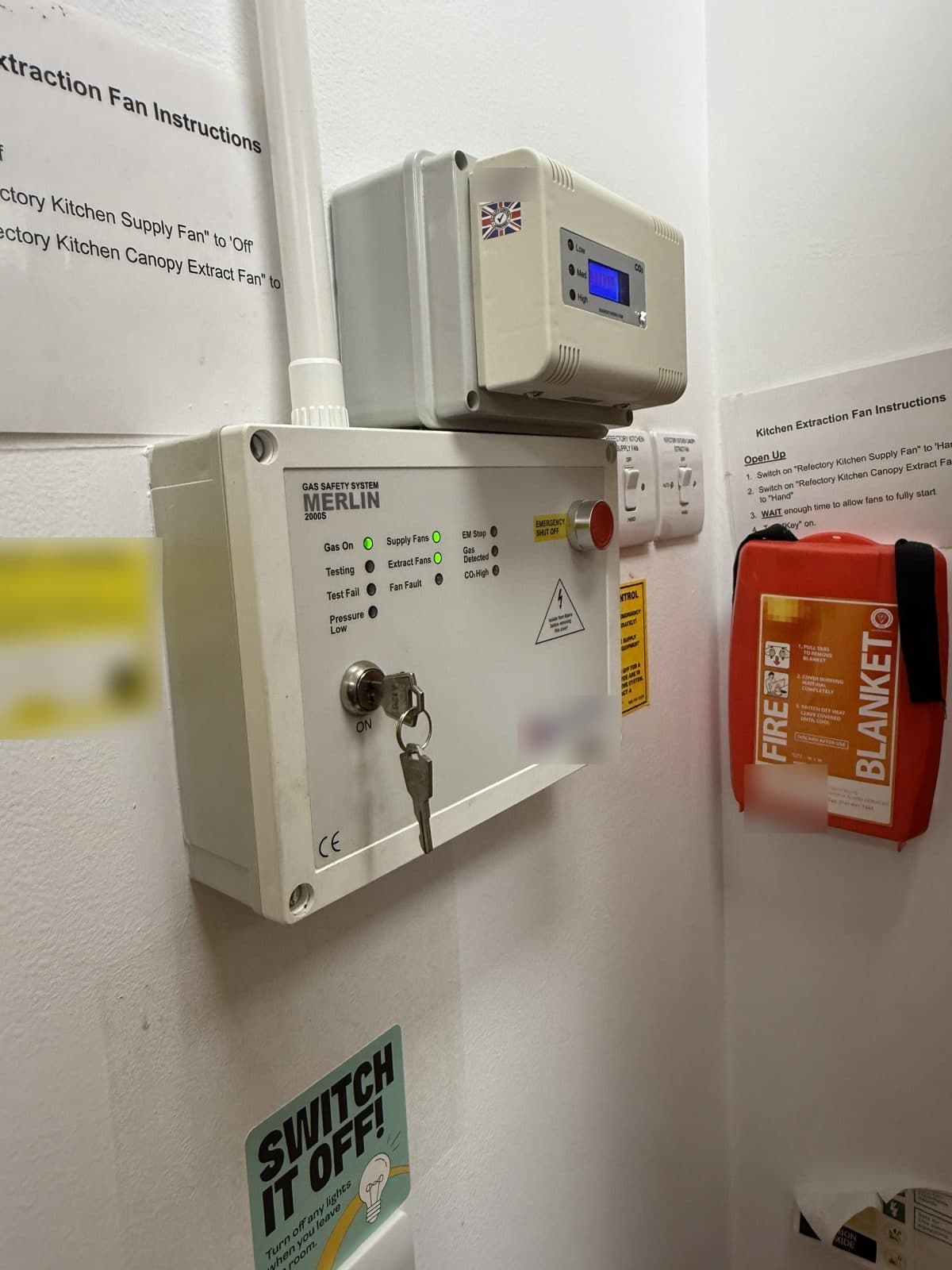
- Commercial kitchens usually have gas interlocks and solenoid valves that have to be checked as part of the work.
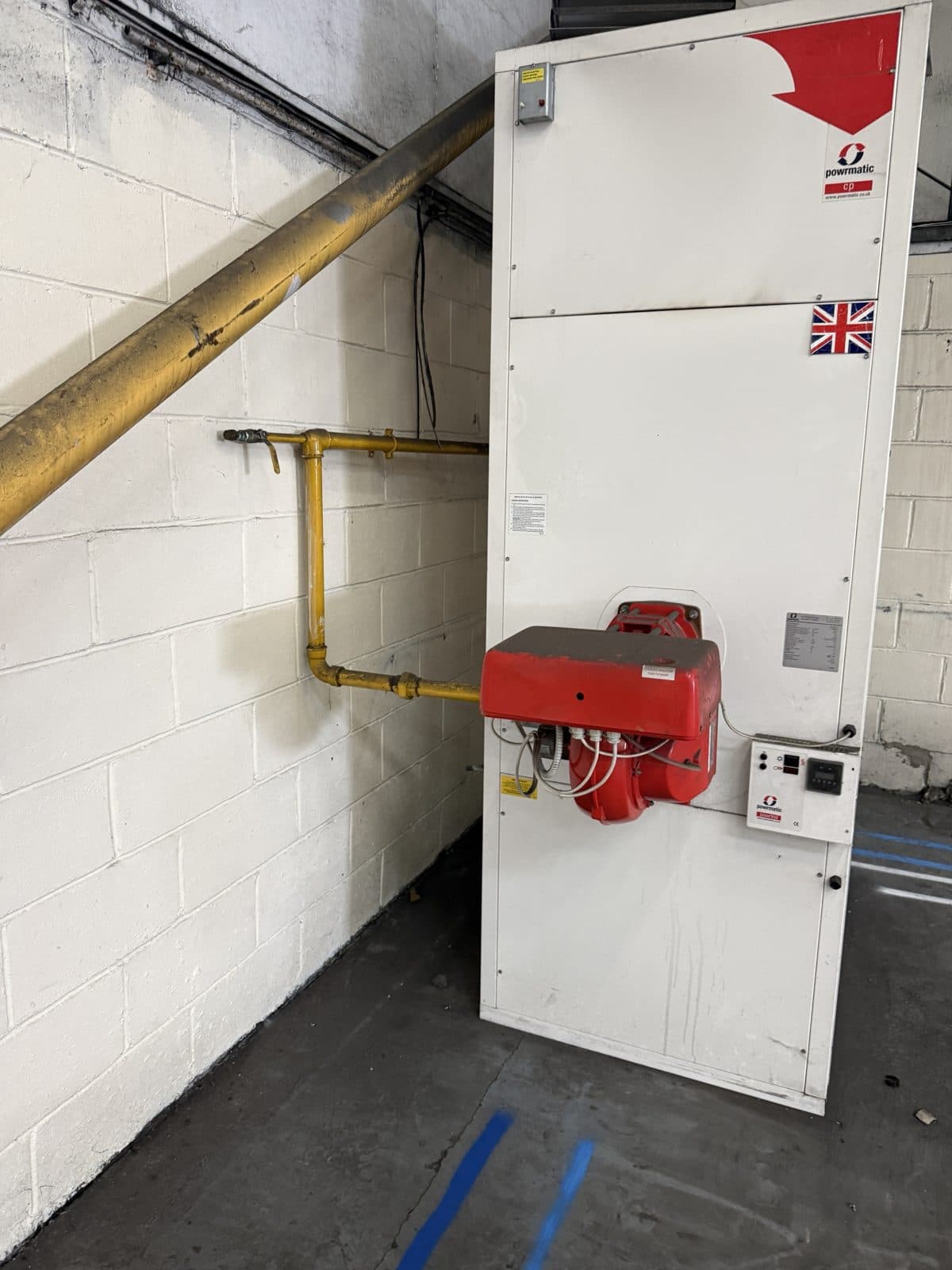
- Plant rooms and warm air heaters can mean large-diameter pipework across a whole building.
- Downtime matters. Where the layout allows, we isolate and repair the faulty section so unaffected parts of the site can be brought back into use sooner.
- Paperwork. You'll get a written record of the test results for your insurer, landlord or facilities team.
Larger commercial sites often have bigger meters, including smart and automated meter reading (AMR) units. The same principle applies: if the installation fails its tightness test, the fault has to be found and fixed before it's put back into service.
Who is responsible for what?
- The service pipe up to and including the ECV belongs to the gas network. In most of Scotland, that's SGN.
- The meter belongs to your energy supplier or their meter provider.
- Everything after the meter, meaning the installation pipework and your appliances, is the responsibility of the property owner or occupier. In a rented home, the landlord is responsible for keeping the gas installation safe.
That's why repairs after a failed meter installation are arranged and paid for by the property, not the supplier.
Getting a Gas Safe engineer out
Homes: Book online and pick a time that suits you. Our Gas Safe registered engineer will trace the leak, explain what's needed and agree the repair with you before any work starts.
Businesses: Use our commercial enquiry form and tell us about the site. We'll arrange a visit and give you a clear quote.
Frequently asked questions
Can I still use my boiler or cooker?
Not if the gas has been turned off or an appliance has been labelled. Wait until a Gas Safe registered engineer has repaired the fault and the installation has passed a retest.
The installer said it was only a small drop. Is it dangerous?
A drop outside the permitted limit means gas is escaping. Small leaks can get worse, and gas can collect in floor voids and cupboards. Get it checked rather than living with it.
Can the smart meter installer fix the leak?
Generally not. Meter installers exchange meters. Repairing the pipework and appliances in your property is work for a Gas Safe registered engineer.
How long does a repair take?
Many domestic leaks are found and fixed in one visit. Concealed pipework or a large commercial installation can take longer, and we'll tell you if that's the case before we start.
I'm a landlord. Does this affect my gas safety certificate?
Yes. A landlord gas safety record can't confirm an installation is safe while it's failing a tightness test. We can repair the fault and carry out the landlord gas safety check on the same visit.
Do you cover my area?
We cover Glasgow, Lanarkshire, Renfrewshire, East Renfrewshire and East and West Dunbartonshire for homes, and across Central Scotland for commercial work. Enter your postcode when you book to check.