If the needle on your boiler's pressure gauge keeps dropping below 1 bar, or the boiler has locked out with a low-pressure fault, water is escaping from the heating system somewhere. Topping up through the filling loop is a normal homeowner job. Needing to do it every week or two isn't normal, and topping up won't fix the cause.
Low pressure isn't dangerous in itself: the boiler shuts down before it gets too low to run. This guide covers what the gauge should read, the likely causes and how to spot each one, how to repressurise without overfilling, and when it becomes a job for an engineer.
The short answer
- Most boilers should read about 1 to 1.5 bar when cold (Baxi allows up to 2 bar), rising a little when the heating runs. Check your manual for your model.
- One or two top-ups a year is normal. Ideal says needing it monthly or more could mean a leak or a faulty pressure relief valve.
- The usual causes are a weeping radiator valve or joint, the relief valve letting water out through the pipe outside, or an expansion vessel that has lost its charge.
- No visible leak? Check the small pipe on the outside wall, and watch whether the pressure heads towards 3 bar when the heating is on.
- You can repressurise yourself by following your boiler's manual. If you overfill it, bleed a radiator with the heating off.
- Expansion vessels, relief valves and anything inside the casing are Gas Safe engineer jobs.
What should my boiler pressure be?
Combi and system boilers run on a sealed system: a closed loop of water held under pressure, with no loft tank to top it up. Any water that escapes shows as a drop on the gauge, and the boiler stops if the pressure falls too low. Figures differ slightly by make, so your manual is the final word.
- Worcester Bosch. Recommended pressure (cold): 1 to 1.5 bar. Worth knowing: Needing to refill often means pipes and radiator valves should be checked for leaks.
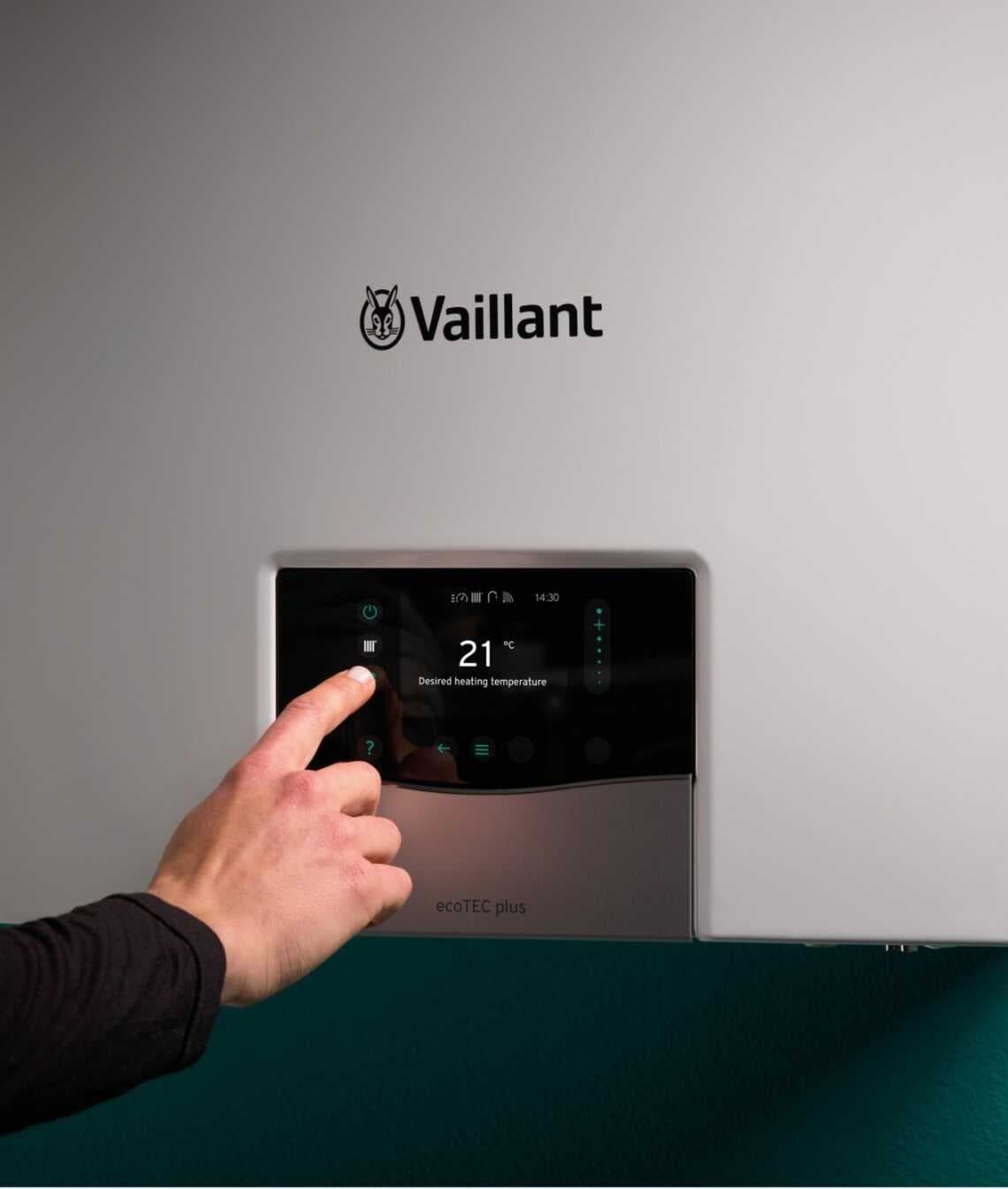
- Vaillant. Recommended pressure (cold): 1 to 1.5 bar (some manuals allow up to 2). Worth knowing: ecoTEC plus boilers stop and show F.22 below 0.5 bar.
- Ideal. Recommended pressure (cold): 1 to 1.5 bar. Worth knowing: Logic combis show F1 for low pressure.
- Baxi. Recommended pressure (cold): 1 to 2 bar. Worth knowing: Should not go much above 2.5 bar when hot.
A small rise when the heating runs is normal, because water expands as it heats and the expansion vessel absorbs the extra volume. A needle that heads towards 3 bar every time the heating comes on is not normal.
Why your boiler keeps losing pressure
A little loss over a year is expected as air escapes through the boiler's air vent and radiators get bled. Beyond that, these are the causes, roughly in order of likelihood.
1. A leak on a radiator, valve or pipe
The most common cause. Radiator valves, joints, bleed screws and towel rails can weep slowly for months. Look for staining, white or green crust and damp carpet. Worcester Bosch also flags pipework under floors, which can leak with nothing showing.
2. The pressure relief valve is discharging
The pressure relief valve (PRV) dumps water if the pressure gets too high; on Ideal's Logic Combi, for example, it is preset at 3 bar. Its discharge pipe is usually a small copper pipe running from the bottom of the boiler to an outside wall. If the end is dripping or the wall below is stained, water is leaving that way, either because the pressure is spiking or the valve isn't closing properly.
3. The expansion vessel has lost its charge
The vessel holds a cushion of air or nitrogen behind a rubber diaphragm, which compresses as heated water expands. Vaillant puts a typical vessel's life at 5 to 10 years. Once the charge is gone, the pressure shoots up when the heating comes on, the PRV dumps water outside, and the gauge reads lower each time the system cools. The tell-tale sign is a much bigger swing between cold and hot.
4. You've just bled the radiators
Letting air out lowers the pressure, which is why Ideal tells owners to recheck the gauge afterwards. One top-up is normal. Needing to bleed the same radiators every few weeks isn't.
5. The filling loop is open or letting by
A filling loop valve left slightly open, or worn so it passes water when closed, lets mains water creep in. The pressure rises until the PRV opens, giving a dripping pipe outside and a gauge that never settles.
6. A leak inside the boiler
The pump, valves, air vent and heat exchanger all hold system water. Look for drips from the underside or marks on the wall below. Don't take the casing off: that is work for a Gas Safe registered engineer.
7. Recent work on the system
A one-off drop after a radiator is refitted or a valve changed is common as trapped air escapes. Steady loss afterwards suggests a poorly made joint, so ask whoever did the work to come back.
What the gauge is telling you
- Slow drop over days or weeks. Most likely cause: Small leak on a radiator, valve, joint or hidden pipe.
- Shoots up when hot, reads low when cold. Most likely cause: Expansion vessel lost its charge.
- Drops, and the pipe outside is wet. Most likely cause: Relief valve discharging or not closing.
- One drop after bleeding or recent work. Most likely cause: Normal: top up and keep an eye on it.
- Creeps up with the heating off. Most likely cause: Filling loop open or letting by.
- Drips or marks under the boiler. Most likely cause: Internal leak.
Combi boiler losing pressure with no visible leak
If every radiator is dry, the water is usually going one of three ways:
- Out of the relief valve pipe, often because the expansion vessel has failed. Check the pipe after the heating has run.
- Into a floor or ceiling. Look for a damp ceiling below or lifting laminate.
- Inside the boiler. A slow internal leak may show only as a mark under the boiler, or not at all.
Safe checks you can do yourself
None of these involve the gas side of the boiler, and what you find helps an engineer get to the cause faster.
- Note the readings. Write down the pressure first thing, before the heating comes on, then again after it has run for half an hour.
- Check the discharge pipe outside for drips, a wet end or staining below it. In a tenement you may need to look from the back court.
- Make sure the filling loop is closed. On lever valves, the handle usually sits across the pipe when closed and in line with it when open.
- Check every radiator and towel rail. Wipe under each valve and joint with a dry tissue.
- Look at exposed pipes under sinks, in cupboards and where pipes drop into the floor.
- Look below you for ceiling stains, or ask a downstairs neighbour.
- Check under the boiler for drips. Don't remove the casing.
- Top up and track it. Note the reading daily for a week. How fast it drops helps pin down the cause.
How to repressurise a boiler
The method varies by boiler, so find your manual first (most are on the manufacturer's website). The main set-ups are:
- Detachable filling loop: a braided hose with a valve at one or both ends, under or near the boiler.
- Fixed filling loop: a hose or ridged pipe permanently fitted under the boiler, with one or two valves.
- Filling key or lever: many Worcester Bosch boilers use a key stored in the bottom panel, or a blue lever.
Using a filling loop
- Turn the heating off and let the system cool.
- Check both ends of the hose are connected. If it has been removed, take off the caps and fit it hand-tight. Don't open a valve you can't identify.
- Open the valve slowly while watching the gauge. With two valves, open one fully, then the other slowly. The pressure can rise quickly.
- Close it when the gauge reaches the level in your manual, usually 1 to 1.5 bar, and make sure every valve is fully shut.
- If your manual says to, disconnect the hose and refit the caps. Expect a few drips.
- Switch the boiler back on, reset it if a fault is showing, and recheck the pressure once warm and again the next day.
Keys and levers work differently: on a keyed Worcester Bosch link, for example, a white knob lets the water in and Worcester warns not to overtighten it. Follow your own manual.
If you overfill it
With the heating off and the radiators cool, bleed a radiator a little at a time, checking the gauge, until it's back in range. Worcester Bosch, Vaillant, Baxi and Viessmann all give this advice. Hold a cloth under the valve.
Topping up treats the symptom, not the cause. Viessmann's advice is that if refilling doesn't hold, you shouldn't keep doing it. Get the system checked instead.
When to call an engineer
- You're topping up more than once or twice a year, or the pressure drops again within days.
- Water is dripping from the discharge pipe outside.
- The pressure climbs close to 3 bar when the heating is on.
- The pressure won't rise when you fill, or keeps rising after you've closed the loop.
- There's a leak you can't stop, or water is getting into a ceiling or floor.
- Water is dripping from the boiler itself.
Expansion vessel recharges or replacements, PRV replacement and any repair inside the boiler are engineer jobs: on most combis they mean opening the casing of a gas appliance, which only a Gas Safe registered engineer should do. Leaks on radiators and pipework are plumbing repairs, covered by our heating and plumbing service.
If water is coming from inside the boiler, switch it off at the switch or fused spur beside it and call an engineer. If you smell gas, call the National Gas Emergency Service on 0800 111 999.
Boiler pressure too high: the opposite problem
High pressure usually involves the same parts. If it's high when cold, the system has normally been overfilled or the filling loop isn't fully closed. If it's fine cold but nears 3 bar when hot, the expansion vessel is the usual suspect, and Baxi notes you may see water dripping from the copper pipe outside. Close the loop and bleed a radiator with the heating off. If the pressure keeps climbing, book an engineer.
Older Glasgow and Lanarkshire homes
Glasgow's tenements were built long before central heating, so the pipework went in later and often runs under timber floorboards. A leak there can go unnoticed for months, and the first sign may be a stain on the ceiling of the flat below, so if you live above someone, ask them to check. In upper-floor flats the relief valve pipe may come out high on a back wall.
Most drinking water in Scotland is classed as soft, so limescale is less of a problem here than in hard-water areas. Either way, the supply isn't why a sealed system loses pressure: the water is escaping somewhere. We cover Glasgow, Lanarkshire, Renfrewshire, East Renfrewshire and East and West Dunbartonshire.
How Titan Heat can help
If your boiler keeps losing pressure, book a repair online. The £85 call-out is fixed and covers the visit and diagnosis by a Gas Safe registered engineer (business registration 982732). We find where the water is going and give you a fixed repair price before any work starts. Our work carries a 1-year parts and labour guarantee.
Typical prices for expansion vessel and relief valve repairs are in our boiler repair cost guide. If the boiler has stopped altogether, start with our boiler not working checklist. See also our boiler repair service and our Worcester Bosch, Vaillant and Ideal pages.
An annual boiler service at £89 is a good chance to mention slow pressure loss before it turns into a breakdown.
Frequently asked questions
What should my boiler pressure be?
Most manufacturers say about 1 to 1.5 bar with the system cold; Baxi allows up to 2 bar. It rises a little when the heating runs. Your manual gives the exact figure.
Is it normal for a boiler to lose pressure?
Occasionally. Ideal says one or two top-ups a year is generally nothing to worry about. Monthly or more usually means a leak or a faulty pressure relief valve.
Why does my combi boiler keep losing pressure with no visible leak?
Usually the relief valve is discharging outside, often because the expansion vessel has lost its charge, or there's a leak under a floor or inside the boiler. Check the pipe on the outside wall first.
Is it safe to repressurise my boiler myself?
Yes, as long as you follow your boiler's manual. It involves no gas work. Never take the casing off.
Will my boiler work if the pressure is low?
Usually not. Boilers lock out below a set point, such as 0.5 bar on Vaillant's ecoTEC plus. Top it up, reset it as your manual describes, and book a repair if it drops again.
Does bleeding radiators lower boiler pressure?
Yes, so check the gauge afterwards and top up if needed. Bleeding a radiator is also how you bring the pressure down if you've overfilled.
Should boiler pressure go up when the heating is on?
A small rise is normal. If it climbs towards 3 bar, the expansion vessel probably needs recharging, which is a Gas Safe engineer job.
How much does it cost to fix a boiler that keeps losing pressure?
With us, the £85 fixed call-out covers the visit and diagnosis, then the repair is quoted at a fixed price before any work starts. Our boiler repair cost guide lists typical prices.