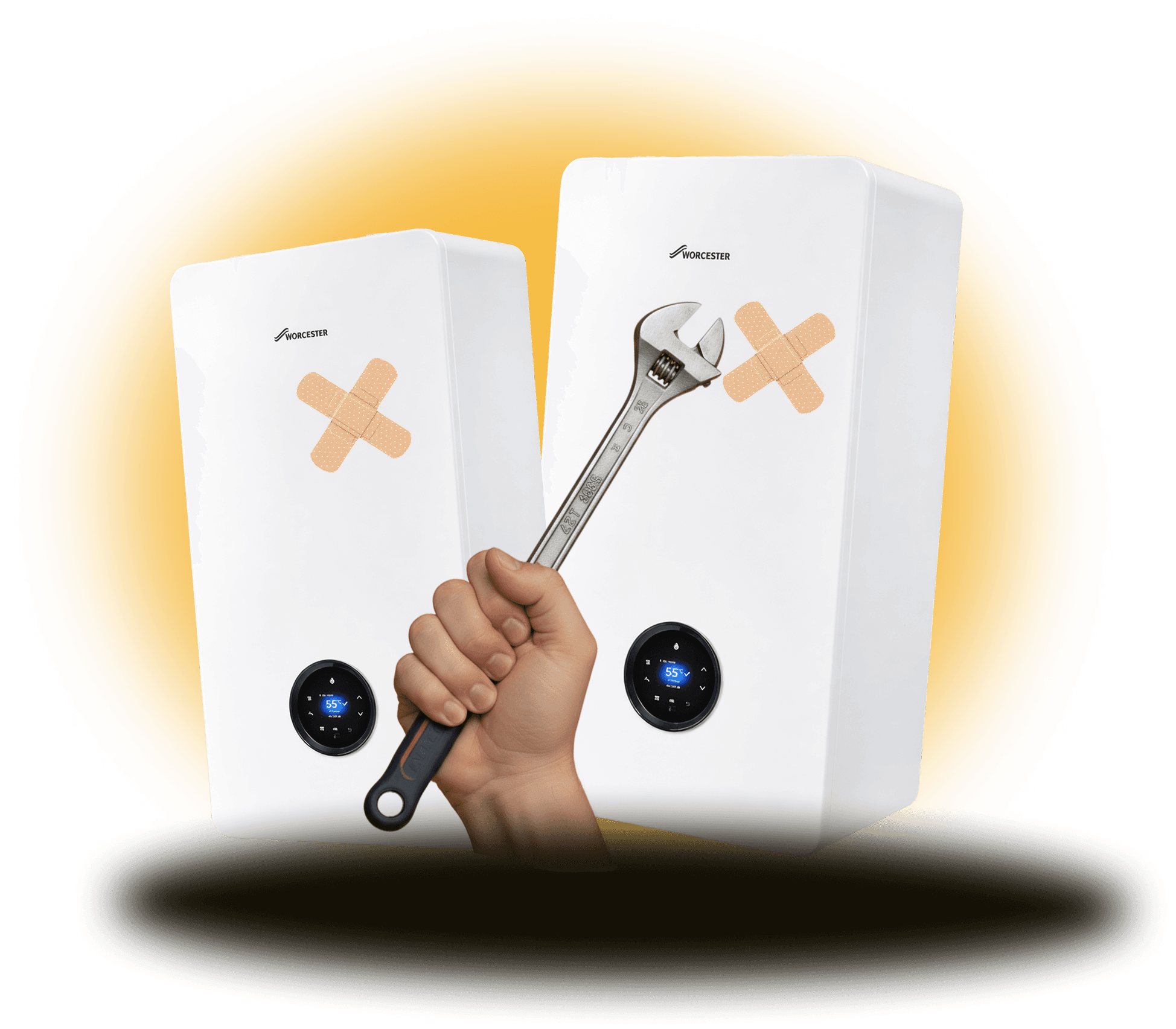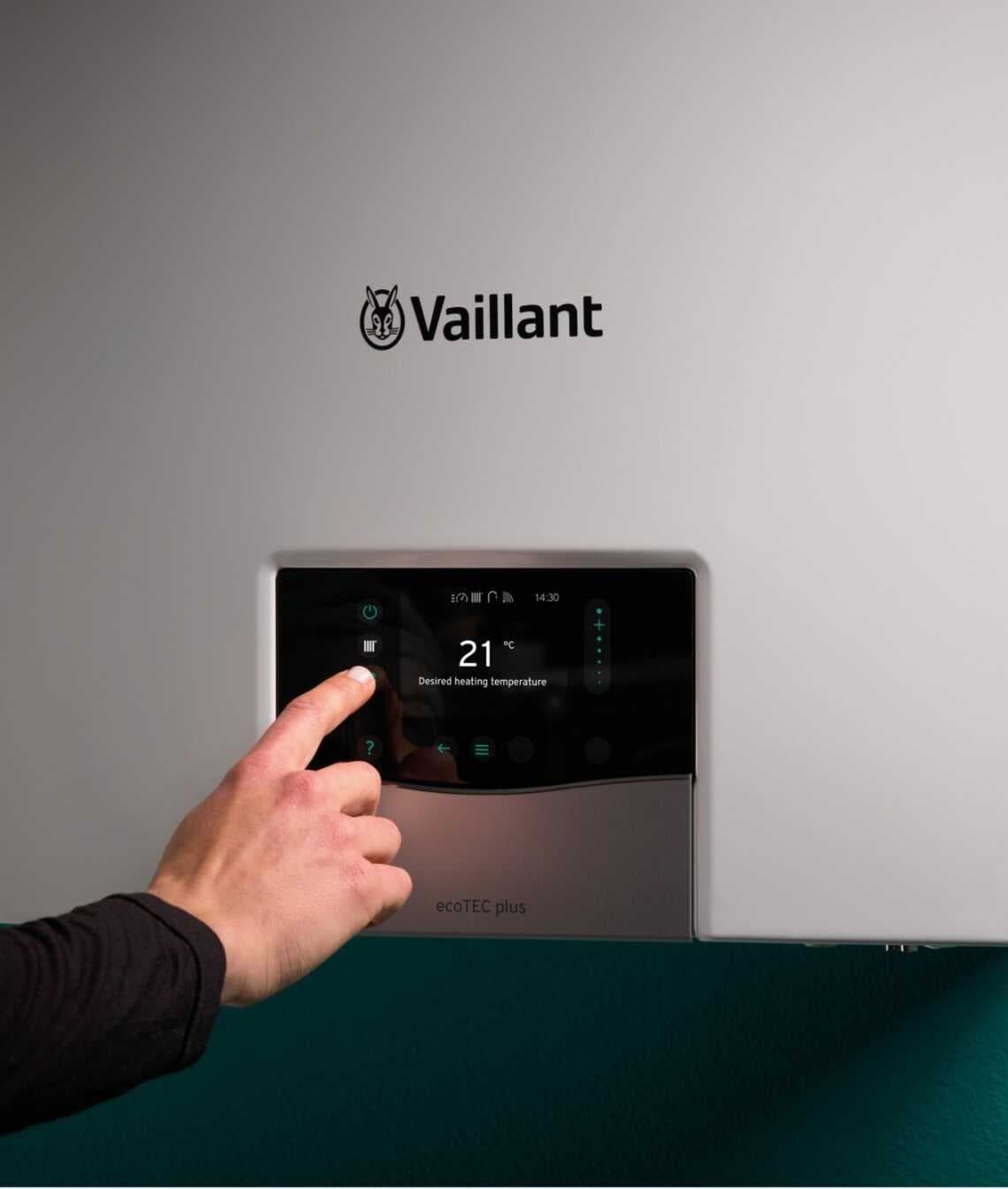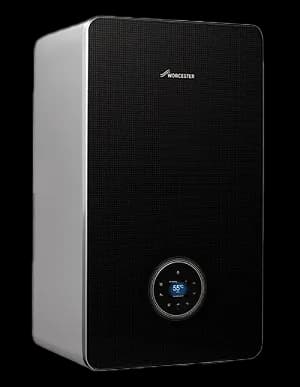
A code on the boiler display is the boiler telling you why it has stopped. Often it is protecting itself from something simple, like low pressure, no gas getting through or a frozen condensate pipe. Some codes you can clear yourself in a few minutes. Others mean a part has failed and you need a Gas Safe registered engineer.
This guide covers the most common codes on the three brands we install: Worcester Bosch, Vaillant and Ideal. Every meaning comes from the manufacturer's own website or manuals, and we've noted where a code only applies to certain models. If yours isn't listed, your user manual has the final word.
The short answer
- A fault code tells you why the boiler has stopped. Several of the common ones point to things you can check yourself: low pressure, no gas reaching the boiler, or a frozen condensate pipe.
- Do the basic checks first, then reset the boiler once, exactly as your user manual describes.
- If the same code comes back, or it's a flame, fan, sensor or circuit board fault, stop resetting and call a Gas Safe registered engineer.
- Never remove the boiler casing. Everything in this guide is done from the outside.
- If you smell gas or anyone has headaches, dizziness or nausea, get everyone outside and call the National Gas Emergency Service on 0800 111 999.
- Our £85 repair call-out covers the visit and diagnosis, and the repair is quoted at a fixed price before any work starts. Book a repair.
What a boiler fault code actually tells you
A modern boiler constantly checks its pressure, flame, water temperatures and fan speed. When something falls outside safe limits, it shuts down and shows a code. Codes differ between brands and sometimes between models, so check the make and model on the front of the boiler before you look a code up.
Lockouts, faults and status codes
Not every code is equal. Some clear once the cause goes away, some need the boiler switching off and on, and the most serious lock out the boiler until the cause is fixed and it is reset. A lockout is deliberate: the boiler has decided it isn't safe to keep firing.
Some codes aren't faults at all. On a Worcester Greenstar i, numbers such as 200 (heating) or 201 (hot water) are status reports. On Ideal boilers, C means heating, D means hot water and 0 means standby. Both brands show SE when a service is due.
How to reset a boiler safely
- Worcester Bosch Greenstar i, Si and CDi: press and hold the reset button for a few seconds, then wait for the boiler to restart.
- Worcester Bosch Greenstar 4000 and 8000: press the up and down buttons until Reset appears on the screen.
- Ideal Logic Max: press Restart on the display when the message tells you to.
- Vaillant: follow the reset steps in your user manual. Vaillant points homeowners to the manual rather than giving one method for every model.
Reset once. If the code comes straight back, stop. Repeated resets don't fix the cause, and Ideal boilers reset too many times within 15 minutes lock out until the power is switched off and on at the fused spur.
Quick checks that clear many fault codes
Before you reset anything, run through these. All are safe for a householder. Our boiler not working checklist covers each in more detail.
- Power. Is the display lit? Check the fused spur switch next to the boiler and the breaker in the consumer unit.
- Gas. Does the hob or another gas appliance work? Check a prepayment meter has credit. If nothing gas-fired works, the problem is the supply, not the boiler, so contact your gas supplier.
- Pressure. Most manufacturers ask for 1 to 1.5 bar with the system cold. Below 1 bar, top up through the filling loop exactly as your manual shows. If it drops again within days, there's a leak or a component fault.
- Condensate pipe. In frost, gurgling followed by a lockout usually means the plastic condensate pipe outside has frozen. Thaw it with warm (never boiling) water, a hot water bottle or a heat pack, then reset. Worcester and Ideal both say only do this at ground level, so if you're in an upper-floor tenement flat and the pipe runs down the outside wall, leave it to an engineer.
- Programmer and thermostat. After a power cut, check the clock and programme, turn the room thermostat up, and change the batteries in a wireless thermostat.
Stop and call if: you smell gas; anyone has a headache, dizziness, nausea, shortness of breath or collapses; a gas appliance has a yellow or orange flame or sooty marks around it; or water is leaking from the boiler. For gas or suspected carbon monoxide, turn the appliance off if it's safe, open windows, get everyone outside and call 0800 111 999. For symptoms, call NHS 111, or 999 if they're severe. Never take the boiler casing off.
Worcester Bosch fault codes
Older Worcester Bosch Greenstar models such as the i, Si and CDi show a two-character code, often with a three-digit number underneath. Quote both when you call: Worcester's manuals use EA 227 as their example. Newer Greenstar 4000 and 8000 boilers show Fault with a number and a coloured icon. Codes marked CDi Classic come from Worcester's service booklet for that range, so check your own manual if you have a different model.
- EA. What it means: Flame not detected; boiler locked out. Worcester lists no or low gas, a blocked condensate outlet or a blocked flue. What you can safely check: Other gas appliances, prepayment credit, condensate pipe for ice (from the ground), flue outside for an obvious blockage. Reset once. When to call an engineer: If it locks out again, or gas is fine and the pipe is clear.
- D5, or a slow-flashing blue light. What it means: Worcester signs of a frozen or blocked condensate pipe on some models. The light is off for longer than it is on. What you can safely check: Thaw the condensate pipe from ground level, then reset. When to call an engineer: If the pipe is clear and it returns.
- E9. What it means: Overheat safety limiter tripped; boiler locked out (CDi Classic). What you can safely check: Pressure 1 to 1.5 bar cold, radiator valves open. Reset once. When to call an engineer: If it returns.
- A1. What it means: Pump has run dry (CDi Classic). What you can safely check: Top up the pressure, then switch off and on. When to call an engineer: If pressure keeps dropping.
- Fault 1017. What it means: System pressure too low (Greenstar 4000 and 8000). What you can safely check: Top up with the system cold, as your manual shows. When to call an engineer: If you're topping up regularly.
- C6. What it means: Fan speed too low (CDi Classic). What you can safely check: One reset. When to call an engineer: Yes.
- E2. What it means: Flow temperature sensor fault (CDi Classic). What you can safely check: One reset. When to call an engineer: Yes.
- F0. What it means: Internal failure (CDi Classic). What you can safely check: One reset. When to call an engineer: If it persists.
- F7 or FA. What it means: Flame detected after the boiler has shut off (CDi Classic). What you can safely check: Don't keep resetting. When to call an engineer: Yes, promptly.
- Fault 2980. What it means: Worcester says don't attempt a fix; heating and hot water stay off until an engineer repairs it (4000 and 8000). What you can safely check: Nothing. When to call an engineer: Straight away.
- SE. What it means: Not a fault: service due after 2,324 burner hours. What you can safely check: Nothing. When to call an engineer: Book a service.
Vaillant fault codes
Vaillant ecoTEC boilers show F, a dot and a number, so F22 appears as F.22. Vaillant's fault code guide doesn't split codes by model, and its condensate advice says F.28 and F.29 are the same across its boilers. For codes caused by the wider heating system, Vaillant suggests your installer looks first.
- F.22. What it means: Low water pressure. What you can safely check: Below 1 bar, top up slowly to 1 to 1.5 bar through the filling loop. When to call an engineer: If the gauge already reads above 1 bar, or pressure keeps dropping.
- F.75. What it means: No pressure rise when the pump starts: low pressure, air, or a pressure sensor or pump fault. What you can safely check: Top up as for F.22 if below 1 bar. When to call an engineer: If pressure is fine and it persists.
- F.28. What it means: Boiler failed to light: no flame during ignition. What you can safely check: Other gas appliances, prepayment credit, condensate pipe for ice. When to call an engineer: If gas is on and the pipe isn't frozen.
- F.29. What it means: Flame went out and the boiler couldn't relight. What you can safely check: As for F.28. When to call an engineer: As for F.28.
- F.54. What it means: Gas supply fault, often with F.28 or F.29. What you can safely check: As for F.28. When to call an engineer: If your other gas appliances work.
- F.20. What it means: Overheat safety cut-out has operated. What you can safely check: Pressure 1 to 1.5 bar, radiator valves open, bleed radiators with air in them. When to call an engineer: If it returns.
- F.27. What it means: Flame detected while the burner is off. What you can safely check: Don't keep resetting. When to call an engineer: Yes: gas valve or circuit board.
- F.32. What it means: Fan fault. What you can safely check: One reset. When to call an engineer: Yes.
- F.35. What it means: Air intake or flue blocked. What you can safely check: From the ground, look for an obvious flue obstruction or a frozen condensate pipe. When to call an engineer: If there's nothing obvious.
- F.0, F.1, F.10, F.11. What it means: Flow or return temperature sensor fault. What you can safely check: One reset. When to call an engineer: Yes.
Ideal fault codes
Ideal Logic and Logic+ boilers flash a letter then a number, such as F and 1, or L and 2. Newer Logic Max and Logic Max Combi2 boilers show plain-text messages instead, such as Low Water Pressure, Ignition Lockout, Blocked Flue/Condensate or PCB Fault, with on-screen steps. The table covers the coded models.
- F1. What it means: Low water pressure. What you can safely check: Top up to 1 to 1.5 bar through the filling loop. When to call an engineer: If you can't, or it keeps dropping.
- F2. What it means: Flame loss. What you can safely check: Other gas appliances, gas on at the meter, prepayment credit. Reset once. When to call an engineer: If gas is fine and it returns.
- L2. What it means: Ignition lockout: the boiler failed to light. What you can safely check: Condensate pipe for ice or a blockage (gurgling when firing is a clue), then the F2 gas checks. Reset once. When to call an engineer: If it persists.
- L1. What it means: Flow overheat or no water flow. What you can safely check: Radiator valves open, pressure 1 to 1.5 bar. Reset once. When to call an engineer: If it persists.
- L3 or FD. What it means: No water flow. What you can safely check: Check pressure, bleed the radiators with the boiler off, then reset. When to call an engineer: If it persists.
- FU. What it means: Flow and return more than 50°C apart, suggesting a blockage. What you can safely check: Bleed the radiators, check pressure. When to call an engineer: Yes.
- F3. What it means: Fan fault. What you can safely check: One reset. When to call an engineer: If it returns.
- F4, L4 or F5. What it means: Flow (F4, L4) or return (F5) sensor fault. What you can safely check: One reset. When to call an engineer: If it returns.
- F7. What it means: Low mains voltage. What you can safely check: Ideal suggests an electrician checks the supply. When to call an engineer: If the supply is fine.
- L6. What it means: False flame lockout. What you can safely check: One reset at most. When to call an engineer: Yes.
- SE. What it means: Service due. Not a fault. What you can safely check: Nothing. When to call an engineer: Book a service.
Smart thermostats and apps showing codes
Smart controls can show codes of their own, which aren't boiler faults. On Ideal's Halo thermostat, CF01, CF03 and CF04 mean a connection has dropped out (thermostat, Wi-Fi or cloud). On Worcester's Key accessory, a flashing red light signals a fault, such as lost contact with the boiler. Whatever an app says, read the code on the boiler display itself before you reset anything or book an engineer.
How Titan Heat can help
If the code keeps coming back, book a repair. Our £85 call-out covers the visit and diagnosis, and once we know what's wrong you get a fixed price for the repair before any work starts. Same-day emergency repairs are available, subject to engineer availability. We're Gas Safe registered (business registration 982732) and work on Worcester Bosch, Vaillant and Ideal boilers across Glasgow, Lanarkshire, Renfrewshire, East Renfrewshire and East and West Dunbartonshire.
When you book, it helps to have:
- The code exactly as shown, including any three-digit number underneath
- A photo of the display and the make and model of the boiler
- What you've already tried: topping up, thawing, resetting
- Whether the boiler is under manufacturer warranty. If so, check the terms first: Ideal, for example, asks you to contact them for faults during the warranty period.
Our boiler repair cost guide lists typical prices for common parts. If an old boiler is throwing codes regularly, we'll tell you honestly whether a repair is worth it, and our new boiler cost guide shows what a replacement involves.
Frequently asked questions
How do I reset my boiler after a fault code?
Use the method in your user manual. On older Worcester Greenstar models you press and hold the reset button; on Greenstar 4000 and 8000 boilers you press the up and down buttons until Reset appears; on Ideal Logic Max boilers you press Restart on the display. Do the basic checks first (power, gas, pressure, condensate pipe), then reset once.
How many times can I reset my boiler?
Once is the sensible limit. If the same code comes straight back, the boiler is telling you the cause is still there. Repeated resetting won't fix it, and Ideal boilers lock you out if they're reset too many times within 15 minutes. Write the code down and call a Gas Safe registered engineer.
What does EA mean on a Worcester Bosch boiler?
EA means the boiler hasn't detected a flame and has locked out. Worcester's manuals list no or low gas, a blocked condensate outlet or a blocked flue as causes. Check your other gas appliances and prepayment credit, look for a frozen condensate pipe in cold weather, then reset once. If it comes back, call an engineer.
What do F28 and F29 mean on a Vaillant boiler?
F.28 means the boiler couldn't light. F.29 means the flame went out and it couldn't relight. Vaillant's first checks for both are the same: make sure your other gas appliances work, top up a prepayment meter and, in frost, check the condensate pipe for ice. If none of those is the cause, you need an engineer.
What does F1 or L2 mean on an Ideal boiler?
F1 is low water pressure, so top the system up to 1 to 1.5 bar using the filling loop. L2 is an ignition lockout, meaning the boiler failed to light. Check the condensate pipe isn't frozen or blocked and that gas is reaching your other appliances, then reset once. Newer Logic Max boilers show these as text messages instead of codes.
Is a boiler fault code an emergency?
A fault code on its own isn't an emergency. It means the boiler has shut itself down safely. It becomes an emergency if you smell gas or anyone has symptoms of carbon monoxide poisoning, such as headaches, dizziness or nausea. Then turn the appliance off if it's safe, open windows, get everyone outside and call 0800 111 999.