Glasgow has more tenement flats than any other city in Britain, and almost none of the boiler advice online is written with them in mind. Solid sandstone walls, shared chimney stacks, four storeys of water pressure, a factor who needs to approve anything on the outside of the building — none of that troubles a semi in Surrey, all of it matters in Shawlands or Dennistoun.
This is our engineers' guide to choosing and fitting a boiler in a tenement, based on the ones we work in every week.
The short version
For most tenement flats — one bathroom, one or two bedrooms — a 24–30kW combi boiler is the right answer, provided the water pressure and flow on your floor support it. The trickier decisions are usually about where the flue goes and what the rules of the building allow, not about the boiler itself.
Problem 1: where does the flue go?
A modern condensing boiler needs a flue to the outside and a drain for condensate. In a tenement you typically have three options:
Through the external wall. The simplest route, if the boiler sits on or near an outside wall. In a tenement that usually means the back wall facing the close or the back court. The flue terminal has to be a set distance from windows, doors, the boundary and anywhere people walk — often a plume management kit is needed to direct the plume away from the neighbour's window above. Thick sandstone walls (often 600mm+) mean a longer core drill and sometimes a flue extension.
Up the old chimney. If the flat had a back boiler or gas fire using the chimney, the stack can sometimes be lined and used for a vertical flue. It must be surveyed, it must serve only your flat, and the liner has to be the right type for a condensing boiler. It's a good solution when the boiler location is on an internal wall — but it's not always possible in a shared stack.
Through the roof or an internal duct. Top-floor flats can flue vertically through the roof. Lower floors generally can't, because the flue would have to pass through the flats above.
The practical effect: the boiler often wants to stay where the old one was. Moving it to a more convenient spot can add a few hundred pounds and, in a tenement, may not be feasible at all. Our online quote asks about the boiler's current location and whether it's on an outside wall so we can price accurately.
Problem 2: the factor and your neighbours
Anything that touches the outside of the building — a new flue terminal, a condensate pipe running down the back wall — is a common repair matter under most tenement title deeds. In practice:
- Tell your factor (property manager) before the work is booked. Most will simply note it; some require written consent, especially in listed buildings or conservation areas (much of the West End and Southside).
- If the building is listed, an external flue on a principal elevation may need listed building consent from Glasgow City Council. Rear elevations are usually fine but check.
- Be a good neighbour about the plume. A flue directly under someone's bedroom window will generate a complaint, and the regulations agree with them.
None of this is a reason not to proceed — it's a reason to plan two weeks ahead rather than two days.
Problem 3: water pressure and flow on the upper floors
A combi boiler heats water on demand, so it needs enough incoming mains pressure and flow to work well. Glasgow's mains supply is generally good, but by the time it has climbed three or four storeys through old pipework it can drop. As a rule of thumb, a combi wants at least 1 bar dynamic pressure and 10–12 litres a minute flow; less than that and your shower will be disappointing.
Your engineer will test this before recommending a combi. If flow is poor the options are a smaller combi with a modest flow rate, a system boiler with an unvented cylinder (if you have the cupboard space — the old press is often perfect), or in some cases upgrading the internal supply pipe.
Problem 4: gas supply
Many tenement flats have the gas meter in a cupboard in the close or on the landing, with a long run of older 15mm or 22mm pipe to the kitchen. Modern boilers need a good gas flow and the run sometimes has to be upgraded to 22mm or 28mm. It's a common extra we price for; it isn't a problem, but it's worth knowing why it's on the quote.
Problem 5: replacing a back boiler or a warm-air unit
Plenty of Glasgow tenements still run on a back boiler behind a gas fire in the living room, or occasionally an old warm-air system. Replacing one with a combi is a bigger job than a straight swap — the old unit is removed and capped, the fireplace made good, new pipework run to wherever the combi goes, and often the hot water cylinder and loft tanks are removed too. It typically takes two days rather than one, but you gain a cupboard, a fireplace and a big drop in your gas bill. Our new boiler cost guide sets out what these conversions add to the price.
Which boilers suit tenement flats?
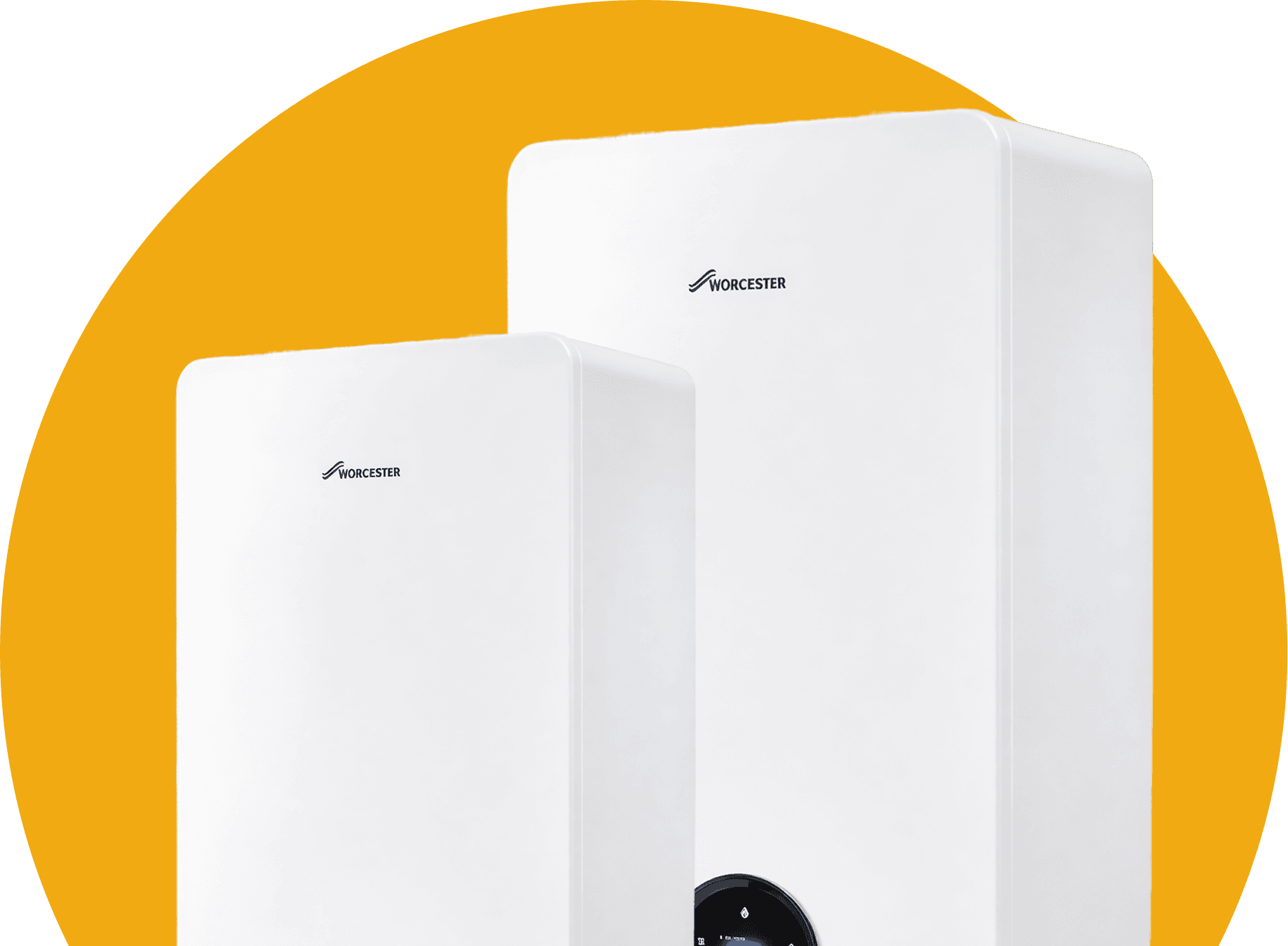
We install Worcester Bosch, Vaillant and Ideal as standard. For tenements the things that matter are:
- Compact size — most flats want a cupboard-fit boiler. The Worcester Greenstar 4000, Vaillant ecoTEC and Ideal Logic/Vogue ranges all have compact combis that fit standard kitchen units.
- Good modulation — the ability to turn down low so it doesn't cycle constantly heating a small flat.
- Flue flexibility — long horizontal flue options and plume kits available.
- Quiet operation — you share walls.
Our Essential package covers most one-bathroom flats; Plus adds a longer warranty and smart controls, which are worth having in a flat you rent out.
Landlords with tenement flats
If the flat is let, remember the annual gas safety check and the Scottish rules on carbon monoxide alarms — our landlord guide covers them. A new boiler with a manufacturer warranty of up to ten years and an annual £89 service is the cheapest way to stop breakdown calls from tenants.
Get a fixed price for your flat
Answer a few questions about the flat — floor, boiler location, outside wall, bathrooms — on our quote page and you'll see a fixed price instantly. If anything about the flue or pressure needs a look, we'll arrange a free visit before confirming.
Frequently asked questions
What size combi boiler do I need for a two-bed tenement flat?
Usually 24–28kW with one bathroom, assuming the mains flow is good. A 30kW makes sense with two bathrooms or high hot water demand.
Can you fit a boiler in a tenement on an internal wall?
Sometimes, via a lined chimney or an extended flue run. It depends on the building — the quote will flag if a visit is needed.
Do I need permission from my factor for a new boiler?
Not for the boiler itself, but tell the factor about any new external flue or pipework. Listed buildings may need council consent for external changes.
Why is my shower poor with a combi in a top-floor flat?
Low mains flow at height. Your engineer can measure it and recommend a combi with the right flow rate or a cylinder-based system.
How long does a tenement boiler installation take?
One day for a like-for-like swap; two days for a back-boiler conversion or relocation.
Written by Stephen, Lead Engineer at Titan Heat. Titan Heat is a Gas Safe registered heating and plumbing business (Reg. No. 982732) serving Glasgow and Lanarkshire.